Friday, 3 July 2020
Review: Sword & Spear - Fantasy rules
Review – Sword & Spear – Fantasy (Mark Lewis, Polkovnik Productions, 2017)
Readers of this blog will be aware that I like the original version of Sword & Spear (S&S), and that these are one of my go-to rules for Ancient gaming (the other rules I tend use are Impetus and To The Strongest). They are a ‘top down’ set of rules with a comparative dice combat mechanism. They keep both players actively engaged and force tough choices about dice allocation and where to focus on the battlefield. Unusually, they are also equally good for both opposed and solo game play. Normally I am wary of rules spread (i.e. adapting one set of rules to fit another period/genre) because frequently the result is a mess, often losing the best ideas and introducing needless fluff.
When I saw the fantasy version of S&S (S&S-F) at a show (remember them!), I was intrigued enough to buy a copy but not so enthralled that I felt the need to get them to the table immediately. Lockdown has provided me with the opportunity to try them out solo. I have now played 3 games using my 6 different 10mm Warmaster armies. How do they fare?
Essentially the original Ancient rules remain intact and the fantasy elements are added on to this solid foundation. These fantasy elements can be broadly described as 3 groups: new unit types, new characteristics, and new rule areas.
The new unit types include Swarms, Beasts, Large Beasts, Monsters and Heros. Whilst the combat values differ depending on the unit type, they do share an independence from direct command control. This allows Swarms and Beasts to make sweeping flanking manoeuvres, threatening the enemy rear zone. They are not hard hitting but, due to their numbers, they take a bit of time to eliminate. Large Beasts and Monsters remain a battleline unit, not too overpowering but one that the enemy needs to contain. I have yet to play using a Hero. I like these additions to the rules and think they work well to promote the fantasy feel of the rules. I have not yet figured out the best use for these new units, but give me time!
As far as new characteristics (fear, poison, frenzy, power attacks etc.), there are too many to discuss here. In keeping with the base S&S rules, they are fairly simple and fit in with the game play easily (it just takes time remembering them).
The new rule areas are more substantial. (a) Flight is a major development allowing such units freedom of the battlefield, but having 2 different altitudes is maybe an over-elaboration. I think opponents camps may suffer and fortification may become the norm. I have yet to experience air-to-air combat, but flying creatures don’t seem to succumb much to ground-to-air missiles as they fly over. Once behind your battleline, you are likely to suffer attacks from the front and rear. (b) Magic is a core element of any fantasy rules and S&S-F magic is generic; 3 levels of magic-user and no ‘race-specific’ spells, just 4 basic spells (attack, protection, boost, rally/heal). In my games so far the attack and protection spells have rarely been used, most focus is on boosting and rallying units. You also soon realise that magic-users are best kept slightly back from the frontline, so they can influence multiple units. There is a 5th type of spell (summoning) which is a very useful way of bringing on off-table units a critical stages of the game. (c) Undead is a new and very different army type with additional rules. Units do not benefit from the normal action dice boosts, but instead require magical boosting from commanding necromancers. Necromancers can also increase the action dice scores which is a nice and powerful change. Undead units are also ‘brittle’ in combat; they ignore the first discipline test but additional discipline tests are automatically failed, which means combat can prove unpredictable.
Overall I think the rule additions all work and don’t adversely affect the basic S&S game. They do convey a ‘fantasy’ flavour to the armies and mechanisms without overwhelming the battle. I don’t feel I have explored the full nature of the changes yet, and I’m sure I missed some of the nuances in tactics I could employ with the new unit types. I’m therefore keen to get a few more games under my belt once lockdown ends.
The games I played solo were:
Dwarf versus Orc/Goblin: A winning draw for the Dwarves. The game involved little magic and could easily be viewed as a clash between a well-equipped, regular force against a barbarian horde (Roman v Gaul?).
Elf versus Undead: A magic heavy game in which the small, elite force of Elves easily vanquished the Undead legions. Actually, it was not so one-sided; the Undead fought well, but one turn of incredibly bad dice turned the tide and the Undead legions suddenly cracked.
Empire versus Skaven: By this stage I felt confident enough to introduce a couple of house rules to the game. I wanted Skaven (and Orc) magic to be more unpredictable, so I introduced a +/-AvD feature into the cost of spell casting for these 2 races. If the magic user did not have sufficient points for the spell, then he is eliminated. This certainly makes use of magic more problematic with these races and I think worked well. I also introduced a new rule for the Skaven Doombell which, when rung, essentially causes Skaven units within a variable distance to automatically become frenzied. This introduced the degree of madness I want from a Skaven army, but will require a few games to see if it is right. Anyway, the Skaven scraped a narrow win.

Friday, 19 June 2020
Off the Painting Table (June 2020)
I am nearing the end of my AWI painting campaign. I have
completed my British regulars and added another green coated loyalist unit. I
just need to paint a couple of Hessian regiments and some Jager skirmishers for
the force to be finished.

The American forces are now almost complete. I’ve painted
another couple of units, and added two militia units made from previously
painted figures I had intended to use with the Muskets & Tomahawk rules.
Just some more skirmishers required.


Saturday, 30 May 2020
AAR Fantasy Naval (Man O'War); 30May2020
During the last couple of months of lockdown I have not done
any solo gaming, but I am now beginning to feel the need. I decided to get some
of those armies out of their boxes that have not seen the light of day for many
years. I started with my Man O’War fleets.
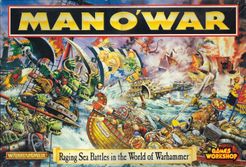
I first encountered GW’s Man O’War game when it first came
out in the early 1990’s, when I gamed in the Scimitar group in Coventry.
Another club member had contacts with GW and got its products early at a
discount rate. For a couple of years Man O’War proved a very popular game
within the club, providing many fun entertaining games, but I did not feel the
need to purchase my own copy of the game. About 10 years later, when I had
moved away, I spotted a copy of Man O’War and Plague Fleet on a B&B stall.
I bought them both for a very reasonable price and immediately painted up the
base set of ships. The models looked great and so, for the next couple of years
I searched all B&B stalls for more ships (I even dabbled on ebay, although
the prices were high!). I also got the Sea of Blood expansion. I soon found I
had sizable fleets (1,500 points+) for nearly all combatants (plus a second
Empire force that I painted as Pirate), plus all the flyers and sea monsters. I
was only missing Skaven, Slaanesh, Tzeentch and Vikings. The lack of Skaven did
bother me, so when Uncharted Seas came out I re-modelled some vessels as Skaven
proxies (very pleased with them), plus I was able to mass an Undead fleet (which
was based on a GW article in a magazine). I must have spent a couple of hundred
pounds, but the models looked super, the game was great, and I reckon at today’s
prices, the collection could be sold for a couple of thousand! Over the years
since I have played many Man O’War games, but the fragility of the models tends
to make me cautious about using them down the club.
The first solo game I set up was Empire versus Bretonnians ,
a human galley against sail clash with no magic involved. The Empire focussed
on disabling the sail powered Bretonnians and the dice gods were with them.
Once the nimble Bretonnians were slowed down, their vessels became easy targets
for ramming and boarding.


Next I played using the two most un-seaworthy fleets i.e.
Orcs versus Skaven. Many Man O’War players tend to regard the rules to be ‘broken’
when using these forces. The Orc Big-chukka vessels are very ineffectual, as is
the Orc magic. I think both these problems can be easily fixed with house
rules, and also most Orc players fail to use patience in their tactics. The Orc
Hulks are the most powerful vessels but are slow; it is vital to hold the
smaller vessels in the fleet back until the Hulks get close, then unleash them!
The Skaven are just potty! An enemy just has to sit back a watch the Skaven
self-destruct; Warp Raiders blow up, Skaven Seers explode and the Doombringer
bell erupts destroying friend and foe alike! I have never seen the Skaven win,
but they lose spectacularly and because of this, I love using them!


I have really enjoyed reviving my interest in Man O’War and
plan to play more games with different fleets.
Monday, 18 May 2020
Off the Painting Table (May 2020) part2
Over the last couple of weeks I have painted a unit of
skirmishers, an artillery piece and a general for each of my AWI armies. The
artillery and generals were not Perry, and are instead from Warlord Games. The
detail and animation are not as good, but they are more than adequate. These
figures complete my initial ‘core’ army structures, with 4 formed infantry
units, a skirmisher half battalion and a light artillery piece for each side.
 |
| The British army |
 |
| The American army |
I am going to have a couple of weeks away from painting
before looking to expand these ‘core’ armies. The British will get another Line
regiment and another unit of Loyalists, and then a couple of units of Hessians.
The Americans will have 2 more formed units and a couple of militia units, plus
some more skirmishers.
Wednesday, 6 May 2020
Off the Painting Table (May 2020)
I have completed the initial batch of formed infantry for
both AWI armies I am currently building.
A unit of Loyalists (De Lancey’s) with their distinctive
white hats (which shows they are ‘good’ Americans, because a white hat always
denotes the ‘good’ guys). I have given the unit a single Union flag.

For the Rebels, I wanted an unusual unit and choose the
Virginia Convention Guards in green jackets and hunting caps. I gave this unit
a National flag.

Lastly I painted a brown coated unit, the 1st Pa.
They actually look better than I expected.

So, next up for both sides are units of skirmishers, an
artillery piece and generals, plus sundry markers etc.
Tuesday, 21 April 2020
Off the Painting Table (Apr 2020) part 2
Two more AWI units completed, another British regiment and the
second rebel unit, another blue coated regiment. I plan to paint a brown and a
grey unit for the Americans but from previous experience, I find the Brown coat
colour rather boring. Instead I might do a more unusual Green unit instead. I
have enough militia figures in my Muskets & Tomahawks collection to
temporarily mount on sabot bases, so soon I will have enough to start playing!


Sunday, 12 April 2020
Off the Painting Table (Apr 2020)
The lockdown goes on and my painting continues. Two more
units completed, another British regiment (the 34th Cumberland
regiment) and my first rebel unit (2nd Penn.). I am not texturing
the bases until I get to near the end of the project, this is always the last
job to complete.


Subscribe to:
Posts (Atom)