Monday, 30 March 2020

Off the Painting Table (March 2020)


I have been struggling to decide on my next project, but the cancellation of Salute and other shows due to CoVID19 prompted me to come up with a decision and buy some figures. I’ve decided to focus on the American War of Independence in 28mm. Next I looked up various OB’s but the brigade structure appears to be very fluid, so I planned to focus on one battle and Monmouth looked good. When the Perry boxes arrived, I flicked through the British painting guide and the name of the 55th Regiment of Foot stood out i.e. The Westmoreland Regiment. My wife hails from Cumbria, a county that is an amalgam of the old counties of Westmoreland and Cumberland. I immediately abandoned the notion of historical OB’s, and will instead use British regiments with a personal connection. It is almost certain that the wife’s ancestors would have served in the local regiments at the time of the American rebellion! So, below is my first unit, the 55th Westmoreland Regiment of Foot.


I’ve not yet decided on a set of rules to use, but I thought a 16 figure unit looked about right. I did consider using a larger number of figures, but on a 6’x4’ table this would have severely impacted on the number of units that could be fielded. I finally have a project to work on. I still need to do much reading and research concerning organisation etc. For example do loyalist units (e.g. De Lancey’s battalions) carry flags? If so, what did they look like? Anyway, next up is the 34th (Cumberland) Regiment of Foot.

Monday, 16 March 2020

AAR; Napoleonic (Sharp Practice), 15Mar2020


My Napoleonic rules odyssey continues, this time using Sharp Practice. I played used my Peninsular French against Ian using Spanish. A simple encounter game fighting over a small village with 55 points aside. In the opening moves Ian deployed and moved 2 groups of guerrillas in to woods on his left flank, whilst advancing with a formation of 2 groups of line troops between the woods and village, and a 3 group formation of line troops in column moved down the village main road. I opposed his main column with a group of voltigeur skirmishers, and on the other flank another group of voltigeur skirmishers held off his guerrillas. Between these forces I had a line formation of 3 groups of fusileurs, and a group of mounted dragoons were to move around the Spanish left flank.


I have noticed a peculiar phenomenon when playing Sharp Practice where the opening movement dice always roll low numbers, and the same happened in this game; my dragoons seemed to be cantering through quicklime and Ian’s columns were equally slow. I soon found out that irregular guerrillas in cover are not easy to shift, and in no time my voltigeurs were running for cover (in fact they never returned to the action). My other voltigeurs were happily taking pot-shots against the slow Spanish column, and my fusileurs got a couple of effective volleys at the other Spanish line formation. Suddenly the Spanish C-in-C motivated the column moving through the village to ‘step out’ and rolled high dice, so they plunged into fisticuffs with my voltigeurs who thought they were safe. The voltigeurs were wiped out but they did manage to wound the Spanish C-in-C, rendering him unconscious. Next turn he recovers, leaps back into the saddle and leads his men in a charge on the end group of my fusileur line! Luckily I hold and the round of fisticuffs is a draw, but the Spanish are now at 50% strength and the C-in-C gets killed. The resulting second round of fisticuffs was very one-sided, the Spanish are thrown back in to the village street and mill about without any leadership. My fusileur line formation is fragmented, but could be recovered. This was very much the turning point of the game, if the heroic Spanish leader had survived then victory could have been achieved. The loss of the Spanish leader effectively ended their aggressive moves and, finally, my dragoons were in a position to charge the recoiling Spanish. This they did and quickly destroyed any opposition, tipping the game and reducing the Spanish force morale to zero. So, a French victory!


A fun game that neatly fitted into an afternoon club meeting. The randomised leader activation mechanism works very well and introduces the right amount of uncertainty. The game turned on the performance of the heroic Spanish general; if he had survived then a glorious Spanish victory could have been achieved. I also learned that once irregular guerrilla skirmishers are established in cover, they are a very tough nut to crack. Cavalry can be devastating if they can get into a position to charge before they take casualties from firing.

Wednesday, 11 March 2020

Boardgame Session; 8March2020


This will be a short entry because we only played the one game before I started to feel a migraine coming on and the session was abandoned.
Ecos: First Continent Cover Artwork

Anyway, we tried Val’s new purchase, ‘Ecos – First Continent’. In this game players jointly construct and populate a ‘new’ landmass, scoring points as they do so. One player draws resource tiles from a bag, which all players then use to distribute power cubes to complete cards previously laid in front of them. Once completed, the cards trigger a set of actions; adding terrain tiles, adding new animals, adding terrain (mountains and trees) to existing tiles, moving existing animals, gaining victory points depending on circumstances etc. Once used, the cards age (rotate) at differing rates. An interesting touch is the ability to use a resource to rotate a ubiquitous player tile and eventually trigger a ‘bonus’ effect; gaining a power cube or new card, or laying another card. This means a player can always perform an action of some sort. The game proceeds until a player reaches 80 points, triggering the final round of play.

The component quality is good; the tiles are sturdy, the animal chits and player cards are fine. The terrain markers stand out, and the resource tiles are excellent. Game play is quick and smooth. It soon becomes clear that what you are really doing is creating an ‘engine’ where the effects of one card can trigger a sequence of beneficial consequences. The problem is the potential to set other players up, because the ‘landmass’ (and animals) are a joint project and available to all. Therefore you need to pay attention to the cards others have in front of them, and the options they are striving to complete e.g. you may have created a nice herd of antelope and scored some points, only to allow a subsequent player to activate a cheetah which eats them all!

I would have liked to play another game because I’m sure there are hidden depths to this game. The game mechanisms are not difficult but require thought, and are sufficiently different to those used in other games to make ‘Ecos’ stand out. I can see this game being a hit in 2020.

Tuesday, 18 February 2020

AAR; Napoleonic (Lasalle); 16Feb2020


This was my first game of 2020, and I have not played an opposed game since mid-November. I have resolved this year to get some of my underused figures out of their boxes and on to the table. Therefore for this game I would use some of my extensive Napoleonic forces which comprise 25mm Minifigs from the mid-1970’s. I also wanted to try the Lasalle rules, with some new house rules I’ve worked on. These house rules cover terrain selection (similar to those found in Sword & Spear), plus a ‘recoil’ mechanism where disruptions are caused by enemy fire may force a retrograde movement (basically a Discipline test). The need for the ‘recoil’ rules were to allow for the possibility for defensive fire to halt attacking units, preventing contact. I hope this will make artillery less vulnerable to frontal attack, and reduce the certainty when attacking lines with multiple columns.
French turning the Russian left flank


We used forces from 1812. Ian was attacking with a French Infantry Division with an organic Light Cavalry Brigade. I was Russian, defending with an Infantry Division and a reserve Dragoon Brigade. Terrain selection resulted in a fairly open battlefield with an area of rough ground in front of my centre sector. I deployed first in a compact central position, with artillery on either side of the rough ground. Ian’s deployment was heavily weighed on his right flank, with a small covering force on the other half of the table. It was clear that my Russian left flank would be under pressure, but I was confident I could transfer sufficient units to hold on. This exactly what happened, but Ian moved faster and in a more determined manner than I had expected. Although I did move covering units, they were not able to deploy in an organised defensive line. More significantly, Ian’s rapid advance effectively denied me of a major part of my baseline on which I could deploy my reinforcements when they arrived. The gallant Russians on the left were ground down, whilst the Russian cavalry had to make a wide sweep around the right, only to run into massed French artillery protected by squares and cavalry! The highlight of the game must have been when one of my Russian squares was attacked by two French columns and a Chasseur unit; I rolled all hits whilst Ian rolled poorly, resulting in a French recoil! The square did not survive long though.
Russian dragoons swinging around the right, whilst the left collapses


The Russian break-point was reached on turn 13, but we held on until turn 18 when the Russian morale collapsed (a couple of turns more and I might have got a draw). Ian fully deserved the win. As for my house rules: The terrain selection worked but might need a little adjustment. The recoil rule worked well; simple to use, utilised an already established game mechanism, made attacking columns less predictable, allowed artillery a better option to hold and fire rather than just retiring. We both enjoyed the game which moved along at a rapid pace. It was interesting that my old Minifigs generated memories from other gamers at the club. I plan to have another game soon and try a different rule set; General d’Armee by David Brown.

Sunday, 16 February 2020

Boardgame session; 15 February 2020


This was an outing for a couple of my charity shop ‘finds’, both of which have a strong ‘take that’ aspect.

Firstly we played Mexica, an old find of mine from a few years back that we have played before. This is a well regarded game that has subsequently been reprinted. The game play revolves around sub-dividing an island into districts of defined sizes, claiming those districts, and then building temples of differing heights to secure your domination of districts. The game is played over 2 phases, and as each phase develops the play becomes more cut-throat as you focus on blocking opponents in addition to building your own empire. This game works well if all players are fully aware of the aggressive play required. If you can laugh at your misfortunes and the undermining of your carefully laid plans, then you will enjoy this game.
Maharaja: The Game of Palace Building in India Cover Artwork
Next we played a new find, Maharaja (another Kiesling & Kramer game). Basically this game is a race to build your 7 temples first, and achieve area control in the cities the Maharaja is visiting on his journey around India (thereby earning money required for building). On each turn a player has 2 actions which he assigns at the start of a turn using an action disc, and has the ‘help’ of a character with special powers. The player interaction comes from the option to change/steal other characters, and the chance to alter the route to be taken by the Maharaja in upcoming turns. Money is tight in the game. It is amusing/frustrating to see the action options chosen at the start of the turn being profoundly impacted by the actions of a player ahead of you in turn order. The character you were depending on has been stolen; the costs you relied on are suddenly out of your reach; the Maharaja is heading in an unexpected direction etc. etc. A crucial element is to be aware of the number of temples built by opponents, you cannot fall behind in this department because the game is a race to build all 7. When the game nears its end is it vital to be able to finish you temples in the final turn and then it comes down to who has the most money remaining. I really enjoy the game and it works well with both 2- and 4-player counts (planning is more tricky with more players). I recently noticed on BGG that there are moves to get a reprint done for Maharaja, which it fully deserves. The putative publishers also suggested they would introduce a points based victory condition, as opposed to the race element in the original game. I can see why they might do this, but I think such a move may remove a major driving force behind the gameplay.

Tuesday, 21 January 2020

Boardgame Session; 19Jan2020


The first boardgame session of the new decade!
Dice Hospital Cover Artwork

Elaine and I have been keen to try ‘Dice Hospital’ for a long time, and our attempts to play at GamesExpo were frustrated by the queues. So now Val & Chris own the game and it was our chance to get it on the table. Dice Hospital did not disappoint. The rules and premise of the game are fairly basic; the dice represent patients and your hospital has to try and treat/discharge them, whilst avoiding death and bed-blocking. On each round (out of 8 total) you select your ambulance of patients, upgrade your hospital facility (either staff or departments), treat dice admitted, decline dice you failed to treat, and gain points for discharged dice. At the start bed occupancy is not a problem, but becomes more of an issue as the game progresses. The upgrades chosen can create cascades, and nice engines form; some players are better treating very ‘sick’ dice, whilst others focus on more ‘healthy’ dice. At the end, scores were tight (I think Chris won) and everyone would happily see this game return to the table. We did not use the hospital ‘administrators’, nor the variable events deck, both of which add greater variety to game play plus differing player options/powers.
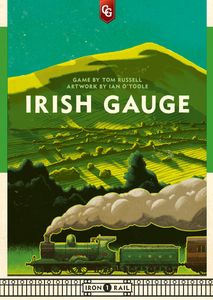
Irish Gauge Cover Artwork

Next we tried ‘Irish Gauge’; a bidding shareholder game based on developing an Irish rail network. On the whole I’m not that keen on bidding games, I’m never sure about potential values and generally feel I’m bidding blind. I’m know with time I would get a better feel for such game play, but the mechanism holds little attraction for me. That is not to say that I did not enjoy this game, because it is fast and player interaction is good, it’s just that Irish Gauge would not be high on my list of games to replay.
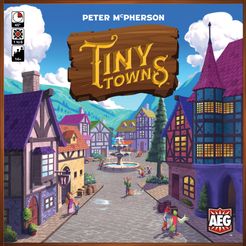
Tiny Towns Cover Artwork

We rounded off the session with a quick game of ‘Tiny Towns’. I’ve discussed this game previously and still think it packs more of a puzzle than new players anticipate. The first few rounds of the game lull you into a false sense of security, the game play is easy. As the game progresses and your town begins to fill, the pressure mounts and it is so frustrating to find yourself boxed in! Hopefully Val and Chris will get the new expansion for Tiny Towns because more stuff will add to the challenges.

Monday, 30 December 2019

Boardgame session; 29Dec2019


The final boardgame session of the decade! Time to get out those Xmas gifts.
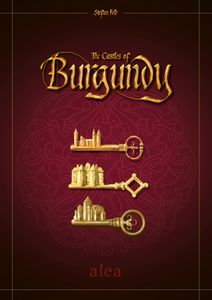
The Castles of Burgundy (20th Anniversary) Cover Artwork


First to hit the table was Castles of Burgundy; a classic now 20 years old (but new to my collection). The ‘new’ printing looks good (although the monasteries are still printed too small to recognise easily), and the inclusion of many small expansions is welcome. The game plays at a good pace, and presents interesting (and diminishing) choices as each round progresses. There appear to be many routes to victory, with none dominating at the expense of others. The game mechanisms are easy to understand (which makes teaching simple) but the possibilities available are large, which can lead to some AP if you are not careful. The final scores were tight but Chris was the winner. Elaine and I have played the 2-player version, and the game scales very well from 2-4 players. We played using many of the expansions, but have yet to use either the ‘trade routes’, ‘victory shields’, nor the ‘Inns’.


Ticket to Ride Map Collection: Volume 7 – Japan & Italy Cover Artwork
Next we played ‘Ticket to Ride- Japan’. In this map variant you have fewer individual trains, but you contribute to joint ‘bullet train’ routes which can be shared to complete tickets. There is a huge potential end-game point shift depending on a players contribution to the ‘bullet train’ project. In the 4-player game there is a 30 point shift between the first and last contributors, which has a profound effect on the relative scores. When we tried the map as a 2-player experience; the ‘bullet train’ effect seemed as strong. It is therefore vital to monitor the number of bullet train markers as the game progresses. The map board is large and the geography of Japan takes some getting used to. On the reverse of the board is the Italy map, which we have yet to try.
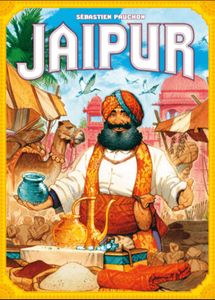
Brass: Lancashire Cover Artwork Jaipur Cover Artwork

Christmas prezzie games yet to hit the table include ‘Brass – Lancashire’, ‘Jaipur’ and ‘Liar Dice’.