
Tuesday, 15 May 2018
Off the Painting Table (May 2018); part 2
A
very short post this time. At Salute I bought some Japanese civilian models from
Col. Bills to add interest to my Samurai games. The six figures are nicely
sculpted and painted well. The noble and his wife were painted with patterned
silk kimono’s, whilst the other peasant figures had plainer dress. I could do
with a few more items to really give my tabletop a more Japanese feel; a statue
or shrine, a gateway, a bamboo grove, some paddy fields etc.


Thursday, 10 May 2018
Review of For King & Parliament ECW rules
I bought a copy of the new ECW rules “For King and
Parliament (FK&P)” (Simon Miller & Andrew Brentnall, 2018) at Salute
this year. I had heard good reports of their sister rules covering Ancient
conflict, “To the Strongest”, and was further encouraged by an excellent demo
game put on at the show. In addition, the rules were reported to be good for
solo play and, due to diary constraints, my opposed gaming opportunities are
restricted at the moment. After reading through the rules, I decided to try the
game as a solo experience using the Battle of Montgomery, 1644 scenario
provided at the back of the rule book.

Before discussing the rules, I will briefly outline the outcome
of the game I played. The battlefield is fairly open and splits into a clash of
foot on one flank and cavalry on the other. The infantry fight was fairly even.
The dragoons and forlorn hope units were cleared fairly quickly due to their
single hit strengths. The clash of the main units of foot was more prolonged
with neither side dominating. The cavalry fight was more fluid. Initially
Parliament was ahead, routing units of Col Trevor’s brigade, but the impact of
pursuit became apparent, which opened up a gap in the Parliament formation. The
remaining un-brigaded Royalist horse moved around the open Parliament flank
looking for a decisive blow. At this point the returning Parliament foraging
horse returned arriving in a compact block directly behind the now exposed rear
of the untried Royalist horse. Fairfax’s veteran regiment charged Vaughn’s
regiment in the rear; they had a large number of to-hit chances and missed them
all! In contrast the Royalist regiment passed its untried test and promptly
scored 2 return hits, killing the Parliament commander (Col. Brereton), and
routing the shocked veterans! This action had bottled up the Parliament
re-enforcements and allowed the other Royalist cavalry to attack and destroy
the exposed Myddleton’s regiment and kill/capture the attached Parliament
C-in-C (Sir John Meldrum). This ended the battle and gave the Royalists
victory.

Regarding the rules themselves:
1. The authors use adjusted decks of playing cards to
resolve all actions and combat, although they do suggest alternatives such as
chits and dice. In my game I used D10 dice instead of cards and this worked OK,
but they are not ideal when working out activations. There is a slight impact
on the distribution of probability by using dice but this is minimal. I think
in future I will move to a hybrid system of chits and dice. I think chits would
simply ‘feel’ better for activations, and dice ‘feel’ more satisfying when
resolving combat. I think playing cards would just clutter the table
un-necessarily, and I dislike having to shuffle repeatedly, so I would avoid
using cards.
2. The tabletop is gridded. Personally I’m fine with this (I
play and like many games from RFCM, which often use a grid system), but other
gamers may not enjoy such a mechanism. On the plus side, the grids allow rule
mechanisms to be clear and simple and, significantly, allow players to use any
basing conventions they are happy with. On the negative side, gridded games
severely limit the movement and manoeuvre options, and can feel a bit like a
boardgame rather than a conventional wargame. The appeal of a gridded wargame
is purely down to a player’s personal preference, but I have noticed a marked
increase in the number of gridded games produced recently.
3. The activation mechanism is the defining feature of these
rules. The first activation of a unit will usually be successful, but there is
always a chance of failure. The beauty is in the ‘Push Your Luck’ element of
deciding further actions, where failure becomes more likely, and which can
prematurely end brigade activations. Prioritising activations becomes a key
decision, and placement of commanders can be vital to mitigate against failure.
Essentially, this ‘Push Your Luck’ element is at the core of these rules, and
if the card/chit/dice Gods are against you, then your plans can quickly
disintegrate. This mechanism creates the fun and tension within the game, but
players have to accept a high degree of luck and swing within the outcomes. I
like the uncertainty and change of fortune produced, particularly in a solo
experience. I know many gamers, especially those who like to plan meticulously,
who would hate the system. So again, it comes down to personal preference.
4. Combat resolution is very simple to calculate and there
is little need to refer to the rule book. I like the differentiation between
firing tactics (single/double/salve), and the ammo rules work well. I would
like to try artillery and see how these perform on the tabletop. The game I
played lacked ‘Dutch’ horse, so again I would be interested to see how these
work on the table. The use of ‘dash’ to reflect the freshness of horse units is
a nice mechanism and fills an omission in other rule systems. Cavalry pursuit
is important and can really muck-up your plans (as Parliament found out in my
game). Rallying was not used as much as I expected because, once forces are
locked in combat, they don’t have opportunities to recover.
5. The ancillary rules covering battlefield set up (terrain
choices and placement, scouting, points etc.) all appear fine. I liked the
‘untried’ status of units in my game, and I particularly like the variable
personality rules for generals, and the variable strategy options. One
criticism of the rules is the lack of a QRS. Most of the rules are very simple
and easy to remember, but a QRS would help to reinforce turn structure and
remind players of modifiers to things like activations.
Overall, I like For King and Parliament. They give a quick,
fast paced game with many important decisions to be made. There is a high level
of luck which can engender significant swings of fortune, which could put some
players off. I think they are eminently suitable for solo play. I don’t think
FK&P will replace my favourite rules for ECW i.e. Regiment of Foote v1
(RFCM, 2002). Interestingly I rejected the second version of Regiment of Foote
(RFCM, 2016) because it was gridded and was too much like Square Bashing (see an
earlier blog post). With FK&P, the gridded mechanism worked well, but the
core of the rules lies in the activation mechanism.
Monday, 7 May 2018
Boardgame session: 6May18
In the UK we are enjoying a beautiful, warm, sunny May bank
holiday. We visited Val and Chris for a leisurely al fresco lunch in their
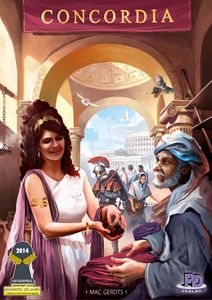
garden, and managed to play a game of Concordia in the afternoon. I’m slightly
surprised that this acclaimed game had not made it to our table before, so was
keen to try it out. It did not disappoint. Essentially it is a trading game set
in the Roman world with players generating trade networks, acquiring and
utilising goods to expand their commercial empires. There are numerous
potential routes to victory. Each player starts with the same hand of action
cards, which they can work through in any order they wish, and to which they
can add to by purchasing further cards from the common bank available to all.
The twist which makes the mechanism really work lies in two key card actions;
the Senator (which allows a player to duplicate another players card), and the
Tribune (which recalls all your played cards back to your hand). Cards also
have a secondary function (the God to which they are dedicated) which can
impact the end-game scoring procedure, and therefore the strategy you may aim
for during the game.
The game play flows nicely once you have got your head
around the different card actions. At the start it feels that only having one
card that allows you to move and build (the Architect) is a bit limiting, but
you soon appreciate the importance of judicious play of the Senator card, which
can overcome such shortcomings. I was surprised at the game length (over 2
hours) considering the speed of card play we achieved, but at no point did the
game feel slow paced or cumbersome. Players face tough decisions during the
game; at points you lack certain key resources, your money supply fluctuates,
you are keen to get access to new regions etc. There is no direct conflict
between players apart from making areas of the board more expensive to get
into, and some of your actions can actually benefit others by providing them
with resources.
When we tallied the points at the end, Val (who had a cloth
monopoly) was the clear winner, whilst I surprisingly was second placed.
Concordia is definitely a game we will happily return to. In fact it has
convinced me to purchase a new game, Transatlantic, by the same designer (Mac
Gerdts) when we visit UKGE in a few weeks. This game uses very similar
mechanics but is set in the Victorian era of steam ships and world trade.
Tuesday, 1 May 2018
Off the painting table (May 2018)
Whilst at Salute I bought some more models for my latest
project, ACW Riverine, from Peter Pig. Four more Union vessels including a
monitor ironclad (USS Passaic), a tinclad (USS Tyler) and couple of common
wooden vessels (USS Fuschia and USS Unadilla).

For the Rebels I got the casement ironclad, CSS Albemarle, a
large tinclad (CSS Gen Bragg), plus a couple of small wooden vessels (CSS
Sumter and CSS Drewry).

Finally I painted up a medium fort and some army artillery
pieces. I now have plenty of ships and all the accessory pieces I need to play
Hammerin’ Iron. I must admit it is tempting to buy all available Peter Pig
models, but I will hold off for the moment.

Wednesday, 25 April 2018
Thoughts on Saga 2nd edition
I remember when Saga first hit the wargaming scene and the renewed
interest it sparked in the Dark Ages period. After a couple of games I was
inspired to get figures for the 4 factions listed (Viking, Anglo-Danish, Norman
and Welsh), and then proceeded to play many games over the next few months,
against many different players. I liked the simplicity of the rules; movement
and combat were easy to work out, the scenarios were clear and decisive. I
thought the lack of morale rules was strange, as was the use of fatigue, but
the rules worked OK so I was happy to ‘refresh’ opposition units to gain combat
advantages. The core mechanic, and real beauty of the rules, were the
Battleboards. They gave each faction its own distinct flavour and allowed skilled
players to tailor their actions to get the most out of the forces on the table.
Even though I played numerous games, I tended to switch between factions, so I
never truly felt I ‘knew’ the Battleboards well enough, and this is probably
why I lost more games than I won. I noticed that ‘good’ players tended to
favour a particular faction, one that they fully understood and could exploit
efficiently. Interestingly after a year or so, my Saga gaming declined and it
has been 2 or 3 years since I last got the toys out of their boxes. This was
not due to dissatisfaction with the rules, but simply I had other projects on
the go.
Well, the new 2nd edition of Saga has been
released and I bought a copy at Salute this year. I’m not going to review the
rules and highlight the changes made, because others have already done this and
I don’t want to go back and re-read the 1st edition rules in depth.
As I have not played Saga for a few years now, I hope my failing memory will
allow me to judge the 2nd edition as (almost) a new player. The
soft-cover base rule book (£10) is produced to the high standards expected of
modern wargame rules, with plenty of informative diagrams plus nice photos and
graphics. I like the use of explanatory text boxes to highlight key points, and
the summary boxes at the end of each section. It was apparent that some changes
had been made to clean up the rules. The movement is now specified as being in
straight lines and the move of a unit is ‘mapped out’ by movement based on the
first figure of the unit. This is fine but will take some time to get used to;
the urge to move figures in a block manner may not be as automatic as
previously done. Warlords are now single units that do not combine with others
in combat, which seems clearer to me. I like the fact that Levy can now generate
Saga dice. All units now have a fatigue limit of 3, irrespective of quality
(not sure whether or not I like this). The combat modification process has been
clarified, with attacker/defender taking it in turns to make choices, and this
should nullify the debates that were previously common in games. Overall,
everything appears fine. My only complaints are: (1) There are no rules for
buildings! How can this be justified? Stating that such rules will be included
in a future Battle book seems to me to be a cop out. In the 1st
edition the building rules were simple and covered less than half a page, so
unless the authors plan a multi-page in depth revision, then the rules should
be included in the base rule book! My games always featured at least one
building and the absence of this key bit of the rules is a bad omission. (2)
The second criticism is the lack of scenarios. Rather than the single scenario
given, I think the authors should have included the 6 basic scenarios from the
1st edition. Again, it stated that scenarios will be provided in the
future Battle book, but I think the addition of a few basic ones in the back of
the base rule book would have been appreciated.
I also bought the Age of Vikings hardback book (£30).
Whereas the base rule book was good value, I’m not sure Age of Vikings was. Essentially
what a gamer needs are the new Battleboards, plus the brief details required
showing the faction composition/equipment. The rest of the material is fairly irrelevant.
Based on my experience of 1st edition Saga, I have never played
using legendary characters, elite or ‘mercenary’ units etc. Maybe some players
like to change things up, but I have found the generic forces to be fine. The Ragnar
text boxes for each faction may turn out to be useful, but I would have found
some general advice on strengths/weaknesses/tactics to be more helpful. The
cardboard Battleboards will obviously be used in every game, but the Age of
Vikings book (although very pretty) will spend most of it time sitting quietly unused
on the shelf.
Monday, 16 April 2018
Salute 2018
This year’s Salute show was a different experience because I
came down with man-‘flu mid-week and seriously doubted whether I would get to
ExCel, but on Saturday morning I felt better so decided to make a quick visit.
By arriving late (11:45) I missed the normal queue but failed to get my free
figure. The size and nature of the show was the same as normal; rather overwhelming
and daunting when first encountered, poorly lit but with plenty of room to walk
around. The number of punters seemed similar to previous years but the
atmosphere felt less manic, possibly due to my own late entrance. All the major
traders are present, plus a great selection of small, niche traders, and
generally I found it easy to access the stands I was interested in. I like the
balance between traders and demo/participation games and I have noticed a
progressive increase in direct links between traders and particular games they
are demonstrating, and I find this useful in helping me to decide whether to invest
in a game or not. My itinerary at all shows follow a standard pattern; firstly
shopping for specific items I need/want, then wandering around viewing the demo
games and possibly taking part if possible, then finally inspired by my travels,
I make impulse buys. I find this last phase needs to be carefully controlled
and if left too long I start to make poor purchasing decisions, so after 2 or 3
hours I need to leave!
This year I managed to get my must buy items: Saga v2 and
Dark Age lists; more Peter Pig ACW riverine models; some D12 dice for the
Shogun boardgame; some Samurai civilian figures and some paints. Not a huge
haul, but I hoped to get some ideas from the demo games and new product releases.
A couple of ECW games inspired me to get the new ‘For King and Parliament’
rules, a derivative of the successful Ancient ‘To the Strongest’ rules. I look
forward to trying them out on the table. The new RFCM wild west rules were
being demonstrated by Peter Pig and look very interesting, and I’m sure I will
buy a copy when released sometime in May (they will allow me to get my Plains
Indians and 7th Cavalry out of their boxes). Before Salute I was
curious about ‘Blood Red Skies’, so I spent some time at the Pacific theatre
demo game (very nicely done) and checked out the rules. They did not grab me;
some nice ideas but too simplistic for my taste, so in this case, the demo game
actually saved me some money! On the whole, the range of demo games was fine
but not spectacular. Those that particularly stand out were: A C18th game set
in Florida between British and Spanish; an ACW game with a large fort and
ironclad; a WW2 Operation Torch/Crete game with nice arid terrain and seaplanes;
and a Blood & Plunder pirate game. There seemed to be more SciFi-type games
and less historical games than usual. The only Napoleonic game I can remember was
a Command & Colours version of Aspern-Essling. There were a few Ancient
games at one end of the spectrum and a re-emergence of Cold War games at the
other end, with little in between. A bit disappointing overall!
So, that is Salute done and dusted for another year! Not
especially exciting, but at least my wallet was not emptied, and I’m still
waiting for some new gaming inspiration.
Thursday, 5 April 2018
10 essential boardgames list, 2018
I have finally succumbed to an urge to publish a “top ten”
style list of the boardgames I most enjoy. I have resisted calling it a “top
ten” because I’m fully aware that my experience and knowledge is not as
expansive enough to justify such a label. There are many, many games which I
know have great reputations and which I have never played (or sometimes, even
seen on the table). Titles such as Twilight Imperium, Cosmic Encounter, Blood
Rage, Descent, Gloomhaven and all the Arkham/Eldridge Horror series immediately
spring to mind. Instead what I have imagined is a ‘desert island’ type of
situation, where I am faced with access to a limited (10) number of games for
the foreseeable future. I assume Elaine will accompany me to the ‘island’ and
that we will encounter ‘new’ potential players, but we don’t know what their
gaming preferences will be. I therefore have planned my list to be
representative of the wide expanse of gaming styles, mechanisms and genres.
I have set myself a few ground rules. I will allow inclusion
of some expansions to the core game if they can be fitted into the base game
box (but for one of my games I would ideally take some additional material). I
also assume I have access to the full range of gaming miscellanea; dice,
playing cards, pens and paper etc. I also have not ranked the games in the
list, so the game listed at number 2 is not necessarily a “better” game than
that listed at number 3. Attempting to do this just proved too hard and,
actually, did not add any further value to the listing process.
Such lists are always a very personal and subjective
exercise. I would gratefully welcome comments and alternative suggestions from
readers, and such contributions would be useful to inspire me to get or try out
games new to me.
 (1) The first game I’m going to list
is a dedicated 2-player, filler style of game. I think this category of game is
very important; sometimes you just want to fill a short period of time with a
small, quick, light game. This is the type of game Elaine and I would take on
holiday and play in those hours between getting back to our lodgings and before
going out to dinner. This is a time to put your feet up and recuperate after a
full day of site-seeing. I have selected Schotten Totten to fill this
requirement, but it was a close call, just edging out Lost Cities. Schotten
Totten is a small, simple card
game that can be a real brain-burner. There is excellent re-playability and
every game poses a challenge. Interestingly, we have never played the game
variants included in the box because we find the base game to be sufficient,
but maybe the isolation of a desert island would encourage us to try these
additions. I think the factor which moved it ahead of Lost Cities is its depth;
Schotten Totten causes you to really analyse your card play and the bluffing
element comes into play more. I would highly recommend Schotten Totten and
would consider it a vital inclusion when packing for holiday trips.
(1) The first game I’m going to list
is a dedicated 2-player, filler style of game. I think this category of game is
very important; sometimes you just want to fill a short period of time with a
small, quick, light game. This is the type of game Elaine and I would take on
holiday and play in those hours between getting back to our lodgings and before
going out to dinner. This is a time to put your feet up and recuperate after a
full day of site-seeing. I have selected Schotten Totten to fill this
requirement, but it was a close call, just edging out Lost Cities. Schotten
Totten is a small, simple card
game that can be a real brain-burner. There is excellent re-playability and
every game poses a challenge. Interestingly, we have never played the game
variants included in the box because we find the base game to be sufficient,
but maybe the isolation of a desert island would encourage us to try these
additions. I think the factor which moved it ahead of Lost Cities is its depth;
Schotten Totten causes you to really analyse your card play and the bluffing
element comes into play more. I would highly recommend Schotten Totten and
would consider it a vital inclusion when packing for holiday trips. (2) I definitely want a tile-laying game
and Carcassonne fits the bill perfectly. This game is a classic and can be
easily taught to new players. I like the scaling to fit varying player counts;
it works OK with just 2 players but equally good with 4 or 5 players. The
randomness of the tile draw gives good replay ability, there are different
routes to victory with a ‘hint’ of take-that. I would take the traditional base
game with the ‘River’ start tiles added. There are numerous small expansions to
the game, many of which I think are interesting, but I have found they tend to get
played once or twice before being left to sit on the shelf. So, I am happy to
leave them behind and just play the base game. Carcassonne has been re-skinned
many times to fit different themes with some rules adjustments; you can simply
choose the theme you enjoy the most. The original theme actually works best for
me, because we have spent a number of very enjoyable holidays touring
South-West France, visiting Carcassonne and surrounding towns and castles, so it
therefore invokes happy memories.
(2) I definitely want a tile-laying game
and Carcassonne fits the bill perfectly. This game is a classic and can be
easily taught to new players. I like the scaling to fit varying player counts;
it works OK with just 2 players but equally good with 4 or 5 players. The
randomness of the tile draw gives good replay ability, there are different
routes to victory with a ‘hint’ of take-that. I would take the traditional base
game with the ‘River’ start tiles added. There are numerous small expansions to
the game, many of which I think are interesting, but I have found they tend to get
played once or twice before being left to sit on the shelf. So, I am happy to
leave them behind and just play the base game. Carcassonne has been re-skinned
many times to fit different themes with some rules adjustments; you can simply
choose the theme you enjoy the most. The original theme actually works best for
me, because we have spent a number of very enjoyable holidays touring
South-West France, visiting Carcassonne and surrounding towns and castles, so it
therefore invokes happy memories.
(3) Deck building is
such an enjoyable mechanism. It has been widely used in many great games, and
therefore demands representation in any games collection. Dominion fits this
niche for me, I still
 remember the pleasure I got when I
first encountered this game. It’s addictive, and this is one possible reason
for the backlash it has engendered amongst some gamers; every year there seems
to be another (large box) expansion, with more cards, combos and rule
additions. I therefore would restrict myself to the base game with a single
expansion only. In fact, I would strongly recommend most gamers to follow a
single expansion policy for Dominion; the game appeal suffers with the more
stuff you get, and it becomes a drag! I am sure there are card types I own that
I have never yet used in play, and the number of possible card combos is huge.
My personal choice of expansion would be Prosperity because I like purchasing
the higher value cards. Another common criticism of Dominion is the lack of
theme. I feel you should play Dominion to simply enjoy the card drafting mechanism
and the lack of theme is largely irrelevant. Other, more thematic, games of a
similar type tend to distract, divert and dilute the card draft mechanics.
remember the pleasure I got when I
first encountered this game. It’s addictive, and this is one possible reason
for the backlash it has engendered amongst some gamers; every year there seems
to be another (large box) expansion, with more cards, combos and rule
additions. I therefore would restrict myself to the base game with a single
expansion only. In fact, I would strongly recommend most gamers to follow a
single expansion policy for Dominion; the game appeal suffers with the more
stuff you get, and it becomes a drag! I am sure there are card types I own that
I have never yet used in play, and the number of possible card combos is huge.
My personal choice of expansion would be Prosperity because I like purchasing
the higher value cards. Another common criticism of Dominion is the lack of
theme. I feel you should play Dominion to simply enjoy the card drafting mechanism
and the lack of theme is largely irrelevant. Other, more thematic, games of a
similar type tend to distract, divert and dilute the card draft mechanics.
(4) The next game on my list is very theme heavy i.e.
Dungeon Petz. This game also encapsulates the worker placement mechanic nicely.
The game uses iconography brilliantly; the game flow,  mechanics and options are
nicely illustrated, easily followed, and most importantly, fit the theme
perfectly. Players face tough choices about where to place their imps/workers,
they need to think ahead, planning for the growing requirements of their ‘petz’,
and which competitions/customers are coming up. Amazingly, players frequently
become so caught up with the engaging theme, that they knowingly make less than
optimal decisions because they have become emotionally ‘attached’ to the particular
‘petz’ that they have raised. Getting those ‘tear’ cubes is so sad (even if
there is a customer who wants sad ‘petz’), and the build up of the brown cubes
in cages is a source of shame! I love this game and have never felt the need to
buy the expansion, although smaller expansions with simply more ‘petz’ would
work well. The base game depth is fine for me, and I don’t feel the need to
expand the options available. I am surprised that the game has not generated a
range of miniature models with clicker bases to replace the card ‘petz’ in the
game. If I was more skilled in modelling with clay, I would make my own ‘petz’,
and maybe this would be a good project in the future.
mechanics and options are
nicely illustrated, easily followed, and most importantly, fit the theme
perfectly. Players face tough choices about where to place their imps/workers,
they need to think ahead, planning for the growing requirements of their ‘petz’,
and which competitions/customers are coming up. Amazingly, players frequently
become so caught up with the engaging theme, that they knowingly make less than
optimal decisions because they have become emotionally ‘attached’ to the particular
‘petz’ that they have raised. Getting those ‘tear’ cubes is so sad (even if
there is a customer who wants sad ‘petz’), and the build up of the brown cubes
in cages is a source of shame! I love this game and have never felt the need to
buy the expansion, although smaller expansions with simply more ‘petz’ would
work well. The base game depth is fine for me, and I don’t feel the need to
expand the options available. I am surprised that the game has not generated a
range of miniature models with clicker bases to replace the card ‘petz’ in the
game. If I was more skilled in modelling with clay, I would make my own ‘petz’,
and maybe this would be a good project in the future.
mechanics and options are
nicely illustrated, easily followed, and most importantly, fit the theme
perfectly. Players face tough choices about where to place their imps/workers,
they need to think ahead, planning for the growing requirements of their ‘petz’,
and which competitions/customers are coming up. Amazingly, players frequently
become so caught up with the engaging theme, that they knowingly make less than
optimal decisions because they have become emotionally ‘attached’ to the particular
‘petz’ that they have raised. Getting those ‘tear’ cubes is so sad (even if
there is a customer who wants sad ‘petz’), and the build up of the brown cubes
in cages is a source of shame! I love this game and have never felt the need to
buy the expansion, although smaller expansions with simply more ‘petz’ would
work well. The base game depth is fine for me, and I don’t feel the need to
expand the options available. I am surprised that the game has not generated a
range of miniature models with clicker bases to replace the card ‘petz’ in the
game. If I was more skilled in modelling with clay, I would make my own ‘petz’,
and maybe this would be a good project in the future.
(5) No essentials list could be complete without the classic
set collection game, ‘Ticket to Ride’. There are so many geographic variants,
but my personal favourite is ‘Europe’. I like the presence of
 tunnels and ferries, and the stations
make the game less cut-throat. I don’t feel the need to include the ‘1912’
expansion, whereas I feel the ‘USA’ game does benefit from the ‘1910’
expansion. I have played a fair few of the different Ticket to Ride versions
and they all give interesting games. Individuals all have their own favourites
and I’m happy to play any that get brought to the table. I don’t think the
choice simply corresponds to the geography the player is familiar with, for
example I’m not overly fond of the ‘UK’ version (too many additional rules to
expand the range and technology).
tunnels and ferries, and the stations
make the game less cut-throat. I don’t feel the need to include the ‘1912’
expansion, whereas I feel the ‘USA’ game does benefit from the ‘1910’
expansion. I have played a fair few of the different Ticket to Ride versions
and they all give interesting games. Individuals all have their own favourites
and I’m happy to play any that get brought to the table. I don’t think the
choice simply corresponds to the geography the player is familiar with, for
example I’m not overly fond of the ‘UK’ version (too many additional rules to
expand the range and technology). (6) As a wargamer I have to include a
combat game. My choice would be Battlelore-2 with the expansions for both the
red and blue forces. Ideally I would also like to take the purple army to
provide greater variability, but these do not fit in the original box, so
probably would have to be left behind. The hex game board allows for simple,
clear-cut rules and the opposed scenario generation system provides for
interesting terrain and force placement. The card-driven command choice
mechanism is clever and I really like it, but I don’t find it translates well
into ‘historical’ backgrounds. This is a major reason why I’m not a fan of
‘sister’ games like Memoir ’44; I don’t think the game mechanisms simulate the
command problems and decision making found on a historical battleground. I
think this criticism equally applies to the combat dice rolling, but in a
fantasy background, these issues are irrelevant. In a fantasy scenario no-one
can argue a point based on precedence; if a designer wants to represent his
Orcs as peaceful and caring, then that’s fine, he is simply diverting from the ‘accepted’
norm. Therefore, I think the game mechanics found in Battlelore are great, but
only in a fantasy setting; they fall short when translated to historical
conflicts. The magic aspects of fantasy combat are also handled in a
streamlined way by Battlelore, and the whole package gives a fast paced game,
packed with interesting decisions.
(6) As a wargamer I have to include a
combat game. My choice would be Battlelore-2 with the expansions for both the
red and blue forces. Ideally I would also like to take the purple army to
provide greater variability, but these do not fit in the original box, so
probably would have to be left behind. The hex game board allows for simple,
clear-cut rules and the opposed scenario generation system provides for
interesting terrain and force placement. The card-driven command choice
mechanism is clever and I really like it, but I don’t find it translates well
into ‘historical’ backgrounds. This is a major reason why I’m not a fan of
‘sister’ games like Memoir ’44; I don’t think the game mechanisms simulate the
command problems and decision making found on a historical battleground. I
think this criticism equally applies to the combat dice rolling, but in a
fantasy background, these issues are irrelevant. In a fantasy scenario no-one
can argue a point based on precedence; if a designer wants to represent his
Orcs as peaceful and caring, then that’s fine, he is simply diverting from the ‘accepted’
norm. Therefore, I think the game mechanics found in Battlelore are great, but
only in a fantasy setting; they fall short when translated to historical
conflicts. The magic aspects of fantasy combat are also handled in a
streamlined way by Battlelore, and the whole package gives a fast paced game,
packed with interesting decisions. (7) I enjoy the co-operative genre of
boardgames a lot, and the giant of the market is Pandemic. This game has added
personal appeal because I am a retired virologist, and the game ‘models’ some
of
(7) I enjoy the co-operative genre of
boardgames a lot, and the giant of the market is Pandemic. This game has added
personal appeal because I am a retired virologist, and the game ‘models’ some
of
the issues I used to work on. I would
certainly include the ‘On The Brink’ expansion. I love the way this game builds
tension, and can throw spanners in the works just as you think you are getting
on top of the problem. Interestingly, I find the difficulty increases with more
players, and winning is easiest with just 2 players. The win/lose balance is
nice, so the game remains challenging even after multiple plays. I like
differing character special powers and the discussions the game produces, and I
have never encountered problems of a dominant, alpha-male type of gamer taking
over; everyone’s input is valued. I have not played the more recent ‘legacy’
versions which have generated a lot of positive reviews, largely because I’m
wary of campaigns that require you to play repeated games over short periods. I
like to chop-and-change in my gaming choices, being a jack-of-all-trades and
master-of-none!
 (8) In contrast to co-op games, I would want a take-that style
of game and King of Tokyo does this nicely. This is a very silly, yatzee dice
rolling game that is quick and fun to play. I would take the ‘Power Up’ expansion to add further silliness.
I prefer King of Tokyo to its spin-off, King of New York, because of its
simplicity. It does not require the additional rules and options the New York
game adds, players simply focus on getting into the city and beating up on
their opponents. Games are short, so the player elimination aspect is not a
problem. My only concern in making this choice is the simplicity of the game,
and I did consider taking Small World instead, which has more depth and
variation. It was another close call, but I went with the ‘pure’ take-that
style provided by King of Tokyo.
(8) In contrast to co-op games, I would want a take-that style
of game and King of Tokyo does this nicely. This is a very silly, yatzee dice
rolling game that is quick and fun to play. I would take the ‘Power Up’ expansion to add further silliness.
I prefer King of Tokyo to its spin-off, King of New York, because of its
simplicity. It does not require the additional rules and options the New York
game adds, players simply focus on getting into the city and beating up on
their opponents. Games are short, so the player elimination aspect is not a
problem. My only concern in making this choice is the simplicity of the game,
and I did consider taking Small World instead, which has more depth and
variation. It was another close call, but I went with the ‘pure’ take-that
style provided by King of Tokyo.
(9) The next game on my list involves a role selection mechanism,
and that is Glory to Rome. I love  the multiple uses of the cards and
the combo possibilities of the buildings. When you choose a role, other players
can follow, so players are constantly engaged. There is a lot of depth and
strategy, and I’m sure I am still a long way from playing effectively. I own
the cartoon-style version of the game and personally like the graphics used. I
have seen the ‘Black Box’ version and found it to be uninspiring on the table.
I am not sure how easy it is to get Glory to Rome at the moment, so my
alternative choice in this category would be San Juan, which has a similar role
selection mechanic and is less complex and easier to understand.
the multiple uses of the cards and
the combo possibilities of the buildings. When you choose a role, other players
can follow, so players are constantly engaged. There is a lot of depth and
strategy, and I’m sure I am still a long way from playing effectively. I own
the cartoon-style version of the game and personally like the graphics used. I
have seen the ‘Black Box’ version and found it to be uninspiring on the table.
I am not sure how easy it is to get Glory to Rome at the moment, so my
alternative choice in this category would be San Juan, which has a similar role
selection mechanic and is less complex and easier to understand.
the multiple uses of the cards and
the combo possibilities of the buildings. When you choose a role, other players
can follow, so players are constantly engaged. There is a lot of depth and
strategy, and I’m sure I am still a long way from playing effectively. I own
the cartoon-style version of the game and personally like the graphics used. I
have seen the ‘Black Box’ version and found it to be uninspiring on the table.
I am not sure how easy it is to get Glory to Rome at the moment, so my
alternative choice in this category would be San Juan, which has a similar role
selection mechanic and is less complex and easier to understand. (10) My final choice of game involves players bargaining with
each other. I did consider Chinatown, which involves no-holds-barred
bargaining, but the game is out of print and is, maybe, too free-form. Therefore I will go with Bohnanza, where players bargain
over beans! I was stunned by this game from the very first time I played. The
rigid card sequence in the players hand of cards force players to interact and
strike deals; sometimes multiple players are negotiating for a particular bean,
whilst at other times you have difficulty giving beans away for free! Every
game is different and tough choices have to be made; when is it best to plant
that extra field? I know there are many versions and expansions out there, but
I have never played them, so cannot comment on whether they are worthwhile. I
would appreciate any views from readers of this blog.
(10) My final choice of game involves players bargaining with
each other. I did consider Chinatown, which involves no-holds-barred
bargaining, but the game is out of print and is, maybe, too free-form. Therefore I will go with Bohnanza, where players bargain
over beans! I was stunned by this game from the very first time I played. The
rigid card sequence in the players hand of cards force players to interact and
strike deals; sometimes multiple players are negotiating for a particular bean,
whilst at other times you have difficulty giving beans away for free! Every
game is different and tough choices have to be made; when is it best to plant
that extra field? I know there are many versions and expansions out there, but
I have never played them, so cannot comment on whether they are worthwhile. I
would appreciate any views from readers of this blog.
So, there it is, my personal list of 10 ‘essential’ games.
Even as I write I can think of numerous omissions, and the temptation to add
more games is very strong. I can see I have included many ‘classic’ games, but
I think such games are considered ‘classic’ for a very good reason; that is they
are inherently good games. I am concerned that I have not included any puzzle
or race games, but I set the line at 10 games, so some excellent games had to be
dropped. I would feel sad to think that Catan, 7 Wonders, 5 Tribes and others
would be left behind to gather dust, but maybe my stay on the ‘island’ would
turn out to be reasonably short.
Subscribe to:
Posts (Atom)