Monday, 20 May 2019

Show Report; Partizan 2019


Unfortunately, due to illness, I missed this year’s Salute show. As compensation I decided to attend Partizan in Newark, a show I have never visited before. Elaine decided to come with me and have an extended w/e by exploring Newark itself, and visiting friends in Nottingham. We drove up on Saturday and wandered around the small, but interesting, town centre. We visited the English Civil War museum (which was OK) and castle area. In the late afternoon we discovered a boardgame cafe  (Letsxcape2together) and decided to spend a couple of hours playing games before finding a restaurant for dinner. The cafe has a reasonable range of games available and provided a very friendly and welcoming atmosphere. We spend much time chatting to the owner about games in general and wargaming activity in the area. I recommend others to call in if they are in Newark.


On the Sunday we went to the Partizan show at the Newark showground.  Parking was free and extensive, and the hall was large, well laid out, with good natural light and room to move around. As well as the usual traders, there were large numbers of well presented participation and demonstration games covering a wide range of genres and historical periods. It was interesting that Elaine came to the show because I could get an opinion of a non-wargaming participant rather than just seeing things with my own perspective. She was very impressed by the modelling skills presented, both in terms of the beauty of the figures and the scenic terrain they were situated on. She also praised the friendly enthusiasm of many organisers who were happy to discuss what they were doing to a complete novice like Elaine. I actually think she enjoyed the couple of hours she spent at the show, but not enough to take up the hobby!


There were many games that took my eye. WW2 was well represented (as usual) and the game that stood out for me was a ‘Malaya, 1942’ Chain of Command game by TooFatLardies – lovely! I was also most impressed by the GNW game by the Grimsby Wargamer Society. Other notable games included a Turk v Moldovan game; a large Indian Mutiny battle; a Boxer Rebellion skirmish game; a Napoleonic Egypt battle, plus some Sharp Practice skirmishes (sorry, I did not note who put these games on). Overall I think the standard of games was very high, far better than a lot of shows I have attended, where I think the quality levels have dropped recently. Interestingly, there was no ‘new’ wargame period, genre, rules or feature that stood out as the must see or must buy item. May be Partizan is too close to Salute for this to be the case? I did manage to get most of the paints, bases and figures that I wanted to buy plus, of course, a few unplanned purchases (e.g. orange trees for a small orchard). These will feature in future posts on this blog.

To conclude, I really enjoyed and was impressed by Partizan. I can see myself attending future Partizan shows (The Other Partizan in August?), and would recommend the show to wargamers wherever you are based in the UK.

Monday, 13 May 2019

AAR: Normans v Scots (Saga v2) 12May2019


In this SAGAv2 game I played a new opponent, Dan, who fielded a Dark Age Scots army. As I’ve never faced Scots before I was interested in what they would bring to the table. Interestingly, I have never played using my own Normans; in fact they have only got to the table once and then were used by my opponent. They were the last Dark Age SAGA force I painted, and this was as my interest in SAGAv1 faded. So, this would be a game played by novices, using unfamiliar forces. I should also thank Dave from the club for his help and advice to both of us during the game.

We played the vanilla ‘Clash of Warlords’ scenario and used a random, generic terrain set up (a few gentle hills and woods). Also for purely curiosity reasons, I decided to field my bow levy troops as 2 weak, 6-man units, rather than the normal 12-man unit. I had an 8-man unit of mounted knights and another 8-man mounted sergeants unit, plus an 8-man crossbow unit and 8-man spear unit. After a cursory reading of the Norman battle-board, I decided the best plan was to take some ranged pot-shots at any exposed Scots, before unleashing my mounted troops a.s.a.p. Nothing fancy here!

The first turn proceeded as expected, my left-hand levy’s using ‘volley’ fire to increase their range and killed a couple of Scots. I foolishly advanced my right-hand levy into some woods, and these were promptly attacked and thrown out by some Scots warriors. I was now concerned that these warriors were in a good position to continue their attack and hit my rather exposed crossbowmen.
Normans at the bottom (on a very sunny day)


Next turn I charged on some other Scots warriors with my mounted sergeants; the warriors closed ranks but were narrowly beaten back. Dan then moved his woodland warriors back to threaten the rear of the mounted sergeants, who looked doomed (but, my crossbows breathed a sigh of relief!). Next turn I went ‘all-in’ charging with the mounted sergeants (again) and my knights on the other flank. I boosted the Sergeants as much as possible and again gained a narrow win. Now it was the turn of my strong unit of knights and I soon discovered the power of the Scots. I had no extra modifiers to my basic 16d6 allocation, but Dan played ‘Long Spears’ converting 4 attack dice to defence dice, and then ‘Counter-Attack’ which gained him 8 additional attack dice! I received 6 hits and save none! My glorious knights had been mauled by some measly Scots with spears!
Norman left flank, where the levy not only survived but actually did some damage.


For the following couple of turns I could not throw a single ‘flag’ symbol, and the remaining dice were either all ‘helmets’ or all ‘shields’ (bizarre). My mounted sergeants made a valiant effort to try and killed the Scots warlord, but failed and were wiped out. My 2 remaining knights tried to KO a 3-man unit of Scots levy, and failed also.
The Norman crossbows about to get their prime target, the mounted Scots warlord.


In the final turns I did manage to clear the Scots levy and this opened a path for my crossbowmen to fire on the Scots warlord himself. I used the ‘Wounded’ ability to gain 2 auto-hits and diced for 1 more. The warlord failed to save any of the 3 hits, and perished. This seemed to anger his mounted Thanes, who moved from behind some woods and charged my crossbows. My Normans survived and shot the last Scots Thane next turn.

The game ended and we tallied the ‘massacre’ points. The Normans won by 23 v 15. This was a really enjoyable game and the margin was larger than I expected (I thought the loss of those 6 knights would have hurt more). The Norman strategy basically focussed on their mounted attacks, but it was the crossbowmen who really won the game. I think the Scots missed a trick by turning back with the warriors in the woods. Dan really used his battleboard well; the ‘No Respite’ ability is really annoying to the opponent, as is ‘Reach’ whereby suddenly most Scots become armed with javelins! The Normans are a powerful, if one dimensional, force and if (!) you roll ‘flags’ then I think they can be a tough nut to crack. As a final note, I fielded my Norman warlord on foot, not mounted, because I wanted to a play a SAGA game where my leader survives for once.

Monday, 29 April 2019

AAR: Punic Wars (Impetus 2nd edition), 28Apr2019


This was the first outing for my 15mm Punic Wars armies, and the first use of the newly released Impetus 2nd edition rules. Ian randomly was assigned the Carthaginians whilst I got the Roman army that basically comprised 2 standard legions with minimal Italian allies. The terrain was pretty open but I did manage to add a river on which I could secure my right flank. The most obvious problem I faced was how to deal with the Carthaginian cavalry command. I had little choice but the use one legion to hopefully hold out against the mounted threat, whilst the other legion pushed on to take out the enemy infantry/elephant command.


Carthage to the left and Rome on the right


The battle developed pretty much as I expected. My right hand legion held and then prevailed against the Carthaginian infantry, destroying some Libyans, Spanish and Campanian foot units. The elephants were also close to death. The large unit of Gauls were tough and prevented a quick Roman victory on this flank. On my left flank the Carthaginian cavalry, especially the excellent Numidians, ran rings around the plodding Romans, quickly destroying the small Roman cavalry detachment. Ian was helped by rolling double 6 on his first initiative, which upgraded his general to Expert (Hannibal?). Incidentally on the other flank I rolled double 1, which downgraded my General to Poor (though this had little effect on the game). I did manage to kill some enemy, particularly when one Roman maniple made multiple moves in good order to kill some Spanish and box in one unit of Numidians. The end of the Roman command came with the destruction of a unit of Triarii, dying surrounded by a swarm of enemy horse. The collapse of this Legion signalled the end of the game and a win for Ian and Carthaginians.
The Roman right flank about to take on the elephants
View from the Carthaginian perspective


Overall a good game and deserved win. I think the Romans will always struggle against the Carthaginian cavalry, and I need to give some thought to how to overcome this inherent problem facing Rome.
The Roman left flank and the Legion is about to die


The original Impetus rules did require a 2nd edition; there were so many additional rules and modifications scattered through the various supplements that needed bringing together and clarification. But the 2nd edition is not simply a compilation exercise, there are significant changes as well. This did slow our first game down because we needed to refer to the rule book many times to check different situations. Generally I think the 2nd edition is good, beautifully produced with good graphics and nice binding that allows the rules to be open on the table. The type of game is essentially the same as that produced by the original Impetus rules, which I think is a good thing. I don’t intend to give a detailed review of the rules themselves (I have not played enough yet) but instead just raise a few points based on this single game and my quick read through of the rules.

Terrain selection seems too basic and will always result in an open battlefield. This will favour some armies and disadvantage others. I would have liked to see more options available to cater for different army types and theatres of conflict. I really like the improved range of options available when being charged (in our game I forgot to use Close Ranks when my Triarii were charged), and the Evade rules are much clearer now. The Roman Pilum is now an effective weapon, especially when first charged. I like the variable Retreat and Pursuit tables which make things much less predictable. I like the more gradual reduction in unit status by becoming Worn then Exhausted. I still think ‘Large’ units are overly powerful (I am considering trying a ‘house rule’ whereby loses are inflicted on the front element of a large unit, and only transferred to the back element at the very end of the turn). I also noticed that the rules for Impetuous units have largely been removed from the 2nd edition, and replaced with a single Frenzy Test to potentially break up group charges. I have yet to play using my Roman versus Early German armies, but I suspect the problems for the Romans have got much tougher. Previously I could manoeuvre my more disciplined Romans to force the impetuous barbarians in to uncoordinated charges. Now I don’t think that option is available, and if the enemy has ‘large’ units, then I don’t hold out much hope for victory with the Romans. We will wait and see. I am sure both Ian and I made some rules errors during the game; for example, in melee when both participants cause no potential hits, then both should take a disorder (7.7.1), which may result in a loss to VBU.

To conclude Impetus 2nd edition has a tentative thumbs up from me and will remain one of my favourite rule systems for Ancient/Renaissance gaming, but more games need to be played before I come to a firm conclusion.

Monday, 22 April 2019

Boardgame session: 21Apr19


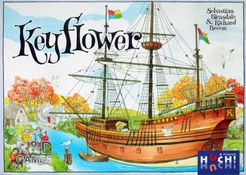
Elaine and I have been playing a range of 2-player games during the last few months. This has allowed us to get some under-played games off the shelf. One game I contemplated playing was ‘Key to the City of London’ but I (surprisingly) found in a charity shop a mint condition copy of the original ‘Keyflower’ game for only £2.50! So, I bought it and found it to be an excellent game (better than ‘Key to the City’). This Sunday Val and Chris came over, so I decided to give it a try using a higher player count. It works just as well with more players, the nasty plays are more spread out, and the play time is still fast. Both Val and Chris took a bit of time to get into the game the rules and structure (probably my poor explanation), but they managed to come in 1st and 2nd, so they clearly got the gist of the game. There is a surprising amount of thought required with each play you make, and I struggled because I could never get the number of meeples I required to make things happen. I think I prefer Keyflower to Key to the City, but I am motivated to try the London game soon.

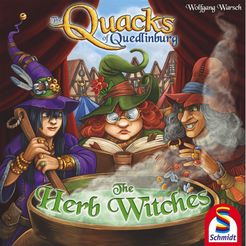
Elaine and I visited Thirsty Meeples in Oxford recently and bought the ‘Herb Witches’ extension for Quacks of Quedlinberg, and have played a number of 2-player games using it. We could now try out the extension with Val and Chris. The new ingredient books are fine, the addition of the locoweed is OK, the Herb Witches are good, but my favourite addition is the orange ‘6’ tile. I seem to be lucky with this expensive tile, it always seems to come out of the bag each round! Now we have 6 books for each ingredient, it allows a simple D6 roll to be used to randomise the ingredient books, and this nicely improves the game replay ability. Overall I am happy with the extension; the price (£15) was OK and it does add some nice options for the game without slowing it down. The 5th player board will also be convenient when Gill, Erin and Paul visit.
  

Monday, 8 April 2019

New Project


As I have now completed (?) my Punic Wars armies, I am again faced with the “Next Project” dilemma. I sat down and evaluated what I most enjoy about the hobby, and this basically breaks down to 3 major considerations: (1) The gaming itself. I like the interaction with other players. I am not especially competitive, so I enjoy a smooth, thought provoking game where winning is a bonus, not a driving force behind my game play. I like trying new rules and finding new (to me) mechanisms that can improve either the historical simulation or the flow of a game. (2) Painting. The whole process of planning, purchasing and painting new armies and units is very rewarding and enjoyable. The time I spend on this aspect of the hobby dwarves that spent actually gaming with the toys on the table. I have even devoted some large chunks of my life to producing a beautiful army, and have yet to get to use these figures on the table! I do feel a certain guilt (?) about this, especially considering the money locked away in my ‘unused’ toys, but the pleasure the process gives me makes the whole thing worthwhile. (3) History. Wargaming encourages me to read and research the periods I am aiming to model and game. As a result, I think my knowledge of British and Western European history is pretty good. As the geographic net spreads out, my depth of knowledge reduces. The purchase of Ottoman and Hungarian armies allowed me to explore the some of the history of Eastern Europe and characters like Janos Hunyadi. My Samurai armies gave me an insight into Japanese history (and geography), and I would love to visit Japan to see the places myself. I am aware of huge gaps in my historical knowledge base. I know little about the history of the Indian sub-continent, and nothing of pre-colonial sub-Saharan African history. The one gap I am most aware of is China. I don’t know when the Ming or Tang dynasties were, and how different periods of Chinese history relate to each other. I am very ignorant about the geography of China; there are major cities whose location I could not place on a map. The locations of mountains, rivers, deserts, flood-plains, forests, jungles etc.,  are a mystery to me. So, for my next project I am going to build up a Han Chinese army and immerse myself in all things Chinese. Why choose the Han dynasty? Well, Lancashire Games produce a number of battlepacks for this period, which is both convenient and cheap. So for only ~£100 I now have enough figures to put together ~800 points for Impetus (using a beta-list Han Chinese list on their website). Also, as I’ve since found out, the Han dynasty was concurrent with the rise of the Romans, so offers an interesting comparison. Additionally in my attic I found an old second-hand Warhammer Ancients book on this period of Chinese history (part of a job-lot bought years ago) called Art of War, which provides a nice guide to painting etc. I’m set to go, but I am aware that a Games Workshop booklet is not the best foundation for my project, so I would welcome any advice from readers out there.
Finally, I missed Salute this year. I was all set to go until a bug struck me down on the Friday. Typically I’m fine now, but disappointed to miss the show which marks the start of the wargaming year for me.

Monday, 11 March 2019

AAR: Successor v Greek (S&S); 10Mar19


It was Ian’s turn to arrange a game and provide the troops. We used his Early Macedonian Successors versus Later Greek Hoplites, in a game of Sword & Spear. I played the Greeks whilst Ian took the smaller, more professional Macedonians. I was slightly worried because I hate fighting pikes and/or elephants; I never know how to tackle these troop types.

The battlefield was fairly open and Ian narrowed the frontage by placing a river on my left flank. I was out-scouted so had to deploy first, and I opted for a fairly conventional approach; hoplite centre with light troops out front, and cavalry and peltasts on the flanks. Ian had a pike juggernaut with elephants in the centre and a strong cavalry flank force facing my right.

The game proved to be a very close fought, tight affair. My hoplite centre remained stationary to avoid early contact with Ian’s pikes. My skirmishers won the conflict with their opposing skirmishers. On my right flank, my peltasts gained the high ground and held off Ian’s cavalry and a unit of my light cavalry actually managed to attack the Macedonian Companions in the rear (they died in the attempt!). The Companions then tried to smash my peltasts and, due to some poor dice rolling, the cream of the Macedonians were eliminated. On the opposite left flank, my undrilled hoplites did manage to advance, turn and threaten the enemy pikes, but were held off by some more Macedonian cavalry. The fact these cavalry were tied down, allowed another unit of Greek light cavalry to move around the left flank and attack the Macedonian camp.
Early dispositions with Greeks at the bottom of picture


Meanwhile in the centre the Macedonian leviathan trudged on. The elephants squashed some Greek skirmishers and pursued into my Greek heavy cavalry, who also died. Then the pike blocks hit home. One unit of hoplites died, but the others just about held on. My single unit of Spartan hoplites plugged the gap and took out Ian’s elephants (hooray!). On the left, I did manage to engage one pike block in the flank with some hoplites, but they could not push home their advantage.
The pikes move forward, elephants about to crush my cavalry, my hoplites
start to swing around on the left flank.


Both armies were now within a single point of breaking, but time was pressing on and I had commitments in the evening, so I offered Ian an honourable draw, which he accepted. I think this was a fair result, but on the drive home I wondered if I had done the right thing? If another turn had been played, I could not envisage Ian destroying another of my units, whereas I still could destroy his camp with my light cavalry (only 1 more hit required). But, if I had failed then further play would have seen my forces in trouble against Ian’s pikes; so maybe I did make the right decision.

This was one of most enjoyable games of Sword and Spear we have played. It was close, competitive and required careful thought by both players. Neither side was too plagued by bad dice, so the luck element was not a major factor.

Tuesday, 5 March 2019

Off the Painting Table (March 2019)


I have done it! My Punic Wars armies are complete as far as figure painting is concerned. First I finished the 4 units of Gallic cavalry (more stripes etc.), then a few Roman velites, next assorted generals, and finally 2 excellent Xyston elephants.
Gallic Cavalry
Velites and assorted Generals
One of my Elephants


Ahead lies a few weeks of intensive basing before the armies can finally take to the table. I have still to buy some base camps (which can wait until Salute) and some slingers would be nice.