Monday, 11 December 2017

Gaming Weekend: 9-10Dec17


My friend, Graham, travelled from Brussels for the weekend. The weather here has turned rather Arctic and my permanent games table is located in the garage, which is not the most salubrious place during the winter months. Therefore we decided to limit ourselves to a mix of boardgames and small wargames that could be played on our regular dining table.

On the Friday night, after dinner, we settled down to play a couple of quick card games; Parade and Sushi-Go Party. Both have simple rules to explain to a new player, and Graham is a fast learner anyway. I think I won with Parade and seem to remember Elaine winning Sushi-Go. Both games are fast but taxing, and are ideal intro games, especially when most focus is on general chatting.

Next day, Graham and I settled down for s a couple of games of Battlelore 2, which Graham had never played before. I have recently finishing painting the purple, Undead army and was keen to get the figures on the table. So I played purple against the red, Barbarian army. The battle was nicely balanced. I had the lead and got to 15 victory points first, but my now decimated army lacked the strength to achieve the final victory point to win! Graham picked off the last weak purple units for a red win instead. In the next game, Graham stuck with the reds and I changed to the blue, Medieval army. Another tight, bloody game but this time I did maintain focus and reached 16 victory points, only 2-3 ahead of Graham. Overall we both felt Battlelore gave a good game. Graham is normally a competitive wargamer who plays detailed historical rules (DBM, FoG, FoW etc.), so I was concerned he might find the system a bit simplistic. I think he enjoyed the unique Richard Borg command card mechanism and combat dice system, and felt the different armies had a different feel and characteristics, accentuated by the Lore decks. The fantasy setting allowed the game mechanisms to work and we both thought that transfer to a historic genera would raise too many anomalies, and would not feel right. So, Battlelore 2 gets two thumbs up, and is an ideal simple war/boardgame where space and time are limited.

We still had a couple of hours until dinner, so we played Jugula. After creating our gladiator schools we set to for a couple of rounds of combat. Interestingly Graham won both clashes but my school achieved the most Glory and had a Paulus-grade fighter, although Graham had the most cash. We both really liked the campaign system which lies at the heart of Jugula, the combats are an enjoyable interlude between pre- and post-fight decisions. In the combat stage Graham showed how important it is to get the crowd on your side early on, whilst I tried to demonstrate how a fast moving Veles figure can run rings around heavier opponents. I did manage to force Graham’s gladiators in to tight corners but he managed to punch his way out with the support of the partisan crowd behind him.

In the evening Elaine joined us for a game of Ticket to Ride, Europe. This classic game Graham had played before, which he demonstrated by winning! Next morning, Graham and I had time to play a game of Dead Man’s Hand before heading out to a local pub for lunch. The beautiful 4Ground buildings and accessories make this a very visually attractive game. The rules are so simple that new players easily pick up the game, and it is ideal to take to the club when you have no game planned because anyone can have a go. We played with small 12 point factions with Graham’s outlaws taking on my cowboys. Needless to say, Graham’s faction shot mine to pieces! The card-draw initiatives and special faction rules work well. I would introduce a couple of house rules concerning out-of-ammo and reloading, but otherwise the game works smoothly and is great fun. I think I might be inspired to buy a few more figures to allow me to field new factions (I would like some banditos and renegade Indians).

All-in-all a highly enjoyable weekend. It was great to see Graham again and we must plan a return visit in early 2018, especially as he has a dedicated indoor wargame room, so cold weather poses no hinderance.

Monday, 4 December 2017

Boardgame session 3Dec17


I attended the Warfare show in Reading a few weeks ago. A great show but I was not inspired on the purchasing front. I’m in a bit of a slump wargaming-wise at the moment – I’m not getting much time to play and don’t have any projects on the go to get the juices flowing. On the plus side I did buy a couple of ‘board’ games at the B&B, and got them on the table when Val and Chris visited this w/e.

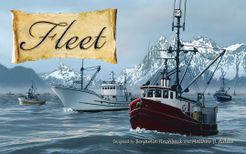
First up was ‘Fleet’, a game themed on Arctic fishing (an unusual theme but it worked OK). This is a card game that involves purchasing fishing licences, launching appropriate vessels and catching fish; all contributing to victory points. The cards are dual-usage (money, vessels and captains) and need to be managed carefully. The licence auction phase is key, but was not as competitive as I expected. We all got up to speed with the rules quickly but understanding strategy takes longer. I think Elaine made some poor choices early and this scuppered her chances. I thought I was ahead but the tally at the end gave Chris a narrow win. I think my mistake was processing fish in the final turn(s) which meant my vessels still had hold space at the end. Anyway I think we all enjoyed the game and it will make further appearances in future sessions. I did also get the expansion box, but I think we will only break this out once we are more familiar with the base game.


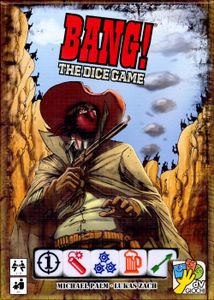
The second game I bought was ‘BANG! The Dice Game’, a western themed, yatzee-style, take-that game. Light, fast and great fun. We played the 4-person version (obviously!), but I think more players would add to the experience, especially with ‘Deputy’ characters added. The individual character cards with their special abilities are a core feature and add flavour. From reading the rules I thought the ‘Sheriff’ player would struggle, but he came through OK in our games, winning 2 out of 3. I now think the ‘Renegade’ is toughest; aiming to be the last man standing and killing the ‘Sheriff’ last.

  
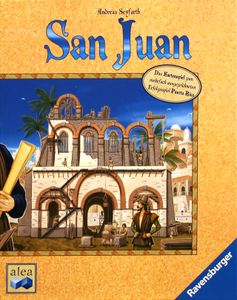
We finished this session with a game of ‘San Juan’, the card version of ‘Puerto Rico’. This is a classic card game that pushes players nicely. There can be some luck in the card draws (I just could not get any production facilities early on) but overall you feel you are making meaningful choices and there are many different routes to victory. The speed of play is good, there is very little AP as players choose their role each turn and all players can carry out the action simultaneously.

Wednesday, 15 November 2017

Review of Blood and Plunder


Readers of this blog will know that I have searched for a set of pirate rules to suit my tastes. The closest I’ve found so far have been Donnybrook, although even they fail in some regards. I have started writing my own rule set (still at a very early stage) but I heard about another possible recent candidate, Blood and Plunder (Firelock Games, 2016) (B&P). I duly bought a copy and have been trialling them for the past couple of months.


So, what do you get for your money? A hardback A4 book with 157 pages that is well written and produced, that contains many excellent diagrams, illustrations and photos throughout. I am no expert on pirate history, but the authors include a good amount of historical background and detail. The period covered is that of ‘early’ piracy (late C17th), when forces used matchlock muskets, with some firelock muskets and pistols. My interests (and figures) are from a latter period (early C18th) when flintlocks had taken over, but the rules are easily adapted to cover this change in technology so this does not present a problem. There are four potential factions available: English, French, Spanish and Unaligned ‘Pirates’. Each faction has two ‘core’ unit types and two ‘support’ unit types, and these vary between the factions due to differing stats and special rules. The force leaders come in three levels (untested, experienced, and seasoned), additionally there are named historical characters available. The rules suggest a ‘standard’ force of 200 points, which generally comprises roughly half a dozen units each with 6-12 men. All the games I have played so far have used this ‘standard’ force size, which matches the size of game I wish to play, and I have no experience of how the game scales up or down. The rules do come with a range of scenarios and can be fought as a simple land-based game, an amphibious game or a ship versus ship game. I have only played land-based games, but have used some printed ship gaming boards to play out boarding actions (the photos are from such a game). I have not used the sailing and ship gunnery rules, so cannot comment about these aspects of the rules.


Command and control uses playing cards to determine unit initiative with higher suites going first, but the lower suites tend to give more actions. Better quality units generally have more actions. Players have a hand size equal to the number of units, therefore choosing the order to play cards is important. Firelock Games do produce themed B&P card decks but I cannot see why players would go to the unnecessary expense to buying them. Commanders can give extra actions to units within their command range which is a powerful mechanism. The range of actions available are straight forward, some are single ‘dedicated’ actions whilst others are ‘standard’ actions (e.g. move) which can be used multiple times in an activation. Movement is in blocks of 4” increments and poor terrain reduces the amount by 1”, which I found rather too little.


Shooting and melee use similar mechanisms with D10 dice: Roll to hit followed by a saving roll to determine casualties. Hits, even if saved, cause a ‘Resolve’ test to be made by the target unit, which may result in accumulation of ‘Fatigue’. Fatigue can result in less actions in future turns and finally result in the unit leaving the table, but Fatigue can be rallied off. I thought this simple morale mechanism worked well in the games played and differentiated units in terms of quality. Again Firelock Games produce special dice to record Fatigue but other markers work just as well. I also thought the reloading mechanism worked well; two smoke puffs when unloaded, which are removed by using actions. If a unit has a single puff, it can fire with half number of figures. Pistols are usually single use weapons, often fired only before melee combat. Both shooting and melee tend to be bloody affairs with units losing figures at an alarming rate, therefore games are short and quick! All units have ‘special’ rules which modify their behaviour in combat, and these ‘special’ rules are the primary source of theme or flavour within this rule set, and need to be constantly borne in mind by the players. Finally another mechanism I liked was the use of ‘Fortune’. Each player starts with 3 Fortune markers which are essentially ‘Mulligans’ that can be used to re-roll a particular set of dice whose results you as a player did not like. When and where to utilise this Fortune is important; use them too early and you can find yourself stuck with a bad roll at a bad time latter in the game!

To conclude, I think these are a well produced set of rules that give a fast paced, simple, easy to understand game that has a reasonable amount of theme. I need to qualify my statement by saying that I have not played with any of the naval sailing rules (which comprise a significant part of the rules), and I have not played with the Spanish factions that include lancers and indigenous natives. I think the peripheral items Firelock Games produce are not required by most gamers. My interests lie in a slightly latter period of history and I hope the publishers produce additional material to cover this in the future. If the late C17th period is your thing, then the factional packs of figures associated with B&P will clearly be of interest, and the unusual natives etc. would be good to get and play with. At the moment I think I rate these rules slightly higher than Donnybrook because the game play is faster and the theme is more focussed, but I would still like more pirate flavour to the rules. I am still encouraged to attempt to write my own rules.

Monday, 13 November 2017

Off the Painting Table (Nov 2017) part 2


Continuing on from my last post, the second and final batch of Battlelore figures have been completed. The speed of painting was again aided by the use of washes, which I find work well on barbarians, beasts and skeletal models. The biggest hurdle was painting the armour areas on the knights in particular. Unfortunately the clear plastic rod keeping the dragon model airborne snapped during assembly! I considered drilling out the recesses and using a spare rod, but after some reflection decided to instead mount the model grounded on the base. This is a more sturdy solution because I find flying models of all kinds tend to be those dropped and broken during play.

So, my painting pile is again reduced. Luckily I plan to attend the Warfare show next weekend where I can stock up for the winter months.

Thursday, 2 November 2017

Off the Painting Table (Nov 2017)


I occasionally play a game or two of Battlelore 2nd Edition. Back in early 2016 I painted the plastic figures for both core armies; they look very good. I had also bought the undead (Waiqar) expansion packs but did not paint the figures immediately; I was suffering from overload after painting the core armies! Anyway, when I decided to give the game another outing recently, it became apparent that you cannot play a painted army against a purple plastic army; it just doesn’t look right! So I had to get these figures painted.


Normally I start with the ‘grunts’ of the army but this time I got the more exotic units out of the way first. The Banshee and Wraiths were simple paint jobs using some green ink wash over a light grey base; I cannot recall why I had this wash in my paint tray but this seemed a good use for it! I think the effect is very nice. The Bone Horrors were also simple, just a grey/brown ink wash over an ivory base, which really picks out the detail. The Barghests (Dire Wolves) and Necromancers were also really easy paint jobs. So, I managed to complete half the total army in less than 10 days!

I am now left with the skeleton core units, plus a rotting dragon, before the undead army is finished. I hope get these figures out of the way by mid-November, when the Warfare show in Reading is scheduled. Then I can buy some more interesting historic figures to build up my lead mountain for the long winter months ahead!

Thursday, 26 October 2017

Boardgame session: 22Oct17


Visited Val and Chris on Sunday and decided to play some ‘old’ games rather than anything ‘new’. There are great games sitting on the shelves than don’t get enough outings because there is always some new eye-candy waiting to get to the table!


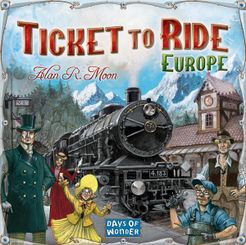
Started with Ticket to Ride – Europe. Of all the TtR variants this remains my favourite, and I like the base game rather than adding depots etc. from the expansion. The game deserves its reputation as a modern classic, the rules are simple and the play fast, but there is enough tactical depth to keep it interesting and fresh. Val won convincingly, and interestingly the rest of us were evenly spaced behind her, separated by 10 points between each player with no bunching up (I came last).


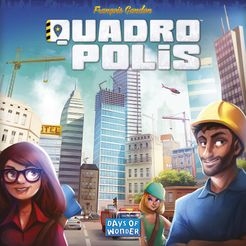
Next to the table was Quadropolis. There are so many ‘town planning’ games out there, and many have too many options for scoring etc., the beauty of Quad is its clean mechanics. Only 4 rounds with 4 choices per round, but the range of options decreases as play progresses. Both Val and I went for the ‘port’ option and tied for first place. We also tied on the first breaker condition (number of meeples), and I just won on the second breaker condition (fewest unfilled spaces). So the game could not have been closer.


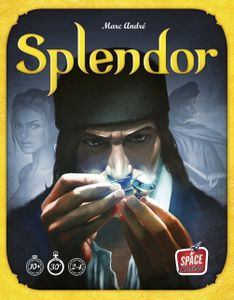
We finished by playing 4 (!) games of Splendour, a favourite of Elaine’s. I think the weak theme stops this coming out more often, because the game play and mechanics work very well. Also, I can never seem to get the aristo’s to visit my ‘shop’, so end up scoring poorly. The poker chips are so tactile and I cannot simply leave them on the table, they have to be held and fiddled with!
At the end of the day everyone had had at least one win and all were happy. We must have more old school game sessions, rather just chasing the latest releases. The fact these games are considered classics, shows they have stood the test of time and deserve their place on the table.