Monday, 19 September 2016

Boardgame session: 17/18 Sept 2016


In my previous post I recorded my wargaming failures playing against my old friend, Graham. Rather than just play wargames all w/e away from Elaine, we ventured from the table and played some boardgames with her.

The first game I played was Mr Jack against Graham (whilst Elaine was preparing dinner). I took the role of Mr Jack (disguised as Sherlock). Graham narrowed down the possible suspects and prevented me from escaping off the board. In the last pair of turns (7 & 8) Graham narrowed the suspects to only two, and the last turn had determined Sherlock to be Mr Jack. But, I managed to ensure Graham had no final character who could reach Sherlock to make the accusation! Therefore, a win for me and Graham would not escape from the w/e undefeated. The game really forces you think hard and is deceptively difficult. I was glad to get my first win of the w/e.
Next, just before dinner, we fitted in a quick game of Tsuro. Elaine got boxed in with no choice that would not take her off the board. I emerged as the winner (again). Tsuro is an excellent filler game, especially for new players because the rules are so simple, also the graphics are very pretty.

After dinner we played a game of Blueprints. The rules are simple to explain, and maybe we taught them too well because Graham comprehensively beat the both of us.


We finished the night with a game of Dominion (base set, using the starter combination of cards). Graham had played this boardgame before, so fully understood the strategy. He loaded his deck with Village and Smithy cards, and in one memorable turn had a run of cards allowing him multiple actions and a pile of money, which enabled him to purchase two (or possibly three) of the valuable Province victory cards. On reflection, this single turn pretty much allowed Graham to win the final scoring phase. So the evening finished with both Graham and I having two wins each.
Next day (after playing wargames in the morning, where I was defeated again) we played a couple of games of ‘Ticket to Ride, Europe’, which surprisingly Graham had never played before. In the first game Graham got stuck trying to build tunnels, whilst Elaine beat me by a single point! I was sure I was going to win (must have added the scores wrong!). The second game was dominated by Elaine who streaked ahead. So, the w/e finished all square. A thoroughly enjoyable gaming session. Graham remains the dominant force in the wargaming arena (one day I will beat him!), but on the boardgame front things are more balanced.


AAR; Wargame Weekend 17/18 Sept 2016


My friend, Graham, who I’ve known and gamed against for over 50 years, and currently lives in Brussels, visited for the weekend. He is an excellent wargamer (i.e. mainly wins) and frequently plays competitively. He used to play ancients (DBM, then FoG) but has dropped the period and now plays predominately WW2 FoW. I therefore decided to show him the ‘Sword and Spear’ rules (S&S) to maybe rekindle his interest and get his 15mm armies out of their boxes. Unfortunately I forgot to use my camera, so there are no photos with this post.

Our first game involved Medieval Hungarian (me) versus Ottoman Turk (Graham). My first mistake was not to allocate enough dice to scouting, so ended up deploying first. The terrain was fairly open, but there was a big forest on Graham’s side of the table opposite my left flank, which I thought would restrict both his deployment and movement of cavalry on this flank. I therefore made my right flank strong (most of my knights), with only a couple of mounted units covering my left flank. Graham promptly deployed heavily against my weak left flank, accepting the forest impediment! Could my outnumbered left flank cavalry hold long enough to allow my right flank troops to move across the army front and intervene? My left-hand cavalry did OK but were eventually overwhelmed, and the Turk cavalry went on to pick off various Hungarian foot and threaten my camp. My potentially decisive right-hand knights did move across but were hindered by being ‘undrilled’ and slow (heavily armoured). Just as they began to close with the Turks, I was reminded by another trait Graham often employs i.e. he will avoid any clash where he has a disadvantage. Rather than face my knights, his heavy cavalry simply retired and surrendered ground, leaving me punching air, desperately trying to pin down his illusive cavalry, and pointlessly moving around the back of the forest. The final result was a decisive win for Graham and the Turks!

Next we had a game using my Greek hoplites for the Peloponnese War, with Graham taking the Athenian/Thessalian army versus my Spartan Alliance force. Terrain placement went well for me until Graham fortuitously placed a marsh in right front of my nicely placed gentle hill on which I planned to centre my army. In this game I was determined not to be outscouted and devoted a lot of dice to ensure this (and still only just beat Graham by one point!). Luckily in the first turns I threw good dice and was able to move my hoplite line forward quickly. I was concerned that my lack of cavalry compared to Graham’s Thessalians would result in me defending threatened flanks against envelopment, but the rapid movement of my hoplites largely removed this option. The clash of the hoplite lines was fairly balanced; my superior Spartans fighting against Athenian hoplites defending another gentle hill. For many rule systems a clash of hoplites can be a very boring situation with little thought as the conflict unfolds, but the dice allocation mechanism of S&S forces players to constantly think, assess the situation and carefully consider where to place available dice. The game remained close and Graham eventually broke the Spartan army, but I was within 2 points (i.e. a single unit of the Athenians, even Psiloi) of victory. We immediately ended the game at this point (lunch was ready) but with hindsight we should have concluded the turn because there was a chance that the end of turn army morale test could have resulted in the loss of one more unit from the Athenians, therefore converting the marginal win in to a draw.

I think Graham enjoyed both the games and the S&S rules. He thought the S&S rules worked well and cleanly, giving a fast, clear result and forcing the player to constantly think about actions/reactions. He did find the mechanism rather abstract i.e. is the game simply a dice allocation game rather than a tactical military simulation? I can see his point, but would counter that this happens with most rule sets (e.g. DBM PIP allocation), and the ‘cheesy’ moves that seem to happen using FoG that are far from ‘historical’. I hope that the two games we played may inspire Graham to buy a copy of the rules and get his 15mm armies on the table again, at least for ‘friendly’ games.

The next day we played a couple of SAGA games. In the first game Graham’s Anglo-Danish force rapidly beat my Vikings. I learnt not to allow your Warlord to become isolated, because he will quickly become dead meat! For the next game I changed my army to Normans. I intended to shoot Graham’s forces, but he quickly scuttled out of line of sight. He then skilfully used his dice to take out my crossbows and damage my peasants. My knights, lead by my warlord, charged a unit of hirdmen, which Graham bolstered with his warlord. The result was the death of both warlords and a drawn game.
Again, this was Graham’s first use of SAGA, but equally I’ve only played one or two games over two years ago, so we were both inexperienced! The games were fast and furious, and we both felt the skill revolved around usage of the special abilities of armies. I think game play would improve with more experience and improved familiarity with the force being used. I therefore resolve to get in more opposed games using SAGA. I don’t think SAGA would work solo because you need the uncertainty provided by an opponent when allocating dice.

Tuesday, 13 September 2016

Review of a wargaming year (2015-16)


The second year of my blog has now been completed. I am glad to say the number of hits continues to increase, up x2.5 fold compared to last year. The majority of readers are from the USA (38%) and UK (28%), but I am pleased that significant numbers come from mainland Europe, Australia and the Far East. I do occasionally see large bursts of activity from Russia (accounting for approximately 10% total activity over the year), but I suspect these are spurious hits, so I have discounted them from my analysis (if you are a Russian reader, then I apologise for discounting you). Interestingly the most ‘popular’ posts are those reviewing various rule sets (Blucher and Donnybrook are the highest scoring), so I will endeavour to continue giving my views on rules, both new and old. I really appreciate any comments made in response, and I particularly enjoyed the comments from the author of Bloody Big Battles after my post on these excellent rules.

The games I have played this year are listed below:

 
Period
Rules
Type
Scale
1
1
ACW
Longstreet
Fire & Fury
Opposed (Win)
Solo
15mm
1
1
1
SYW
Black Powder
Maurice
Honours of War
Opposed (Draw)
Refereed
Solo
15mm
15mm
15mm
2
Fantasy
Kings of War
Solo
28mm
1
AWI
John Bull/Patriots
Opposed (Win)
15mm
3
Ancient
Sword & Spear (Rome v German)
 (Macedon v Greek hoplite)
Solo,
Opposed (Win)
Opposed (Lose)
28mm
 
15mm
1
Pony Wars
Din of Battle
Solo
15mm
1
RCW
Red Actions
Solo
15mm
2
FIW
Muskets & Tomahawks
Solo
28mm
1
Dark Ages
Saga
Solo
28mm
2
Napoleonic
Sharp Practice v2
Solo
28mm
2
WoR
Bloody Barons
Solo
15mm
1
ECW
Regt of Foote v1
Solo
15mm
2
FPW
Bloody Big Battles
Solo
10mm
~6-8
Wild West
Dead Man’s Hand
Opposed
28mm
=30+


I have played fewer games this year compared to last year (30 compared to 41) and, not counting my trial games of Dead Man’s Hand, I have only played 5 opposed games. My win ratio is good (3/5) and I only lost 1 opposed game! Most of my gaming has been solo which is disappointing and is due to an overly packed social diary preventing me from attending club meetings. I think this is compounded by a degree of laziness on my part, and I must do better next year! So, my main objective for the year (i.e. playing more opposed games) was not met.

The game rules that stand out for me are Sword & Spear and these seem to have replaced Impetus as my go-to Ancient rules. These rules have encouraged me to get my 15mm Ancient armies out of their boxes again. In addition, I really enjoyed playing Dead Man’s Hand as a fast, light system that can easily appeal to even non-miniature gamers. The rules highlight of the year must be the release of Sharp Practice version 2, which are a significant improvement on version 1. I want to play more using these rules. Another set of rules I enjoyed (and must play more of) are Bloody Big Battles. I now possess reasonably sized 10mm armies for the period and must get them on the table soon. My flirtation with fantasy (Kings of War) was brief (and enjoyable) but I think is over and done with for now. The fantasy scene just cannot hold my attention for some reason.

The disappointment of the year has been the fact that my Longstreet campaign against Ian has not progressed as fast as either of us would want (only 1 game played). This is simply down to incompatible diaries and I hope we can complete the final two battles sometime this Autumn, especially because Ian is out of the country next year on sabbatical. Therefore my second objective for the year (i.e. completion of the Longstreet campaign) was again not met.

Overall, 2015-16 has been a quiet wargame year for me. I really must do better. In the next year I can foresee more games of Sword & Spear and Sharp Practice. I intend to complete the Longstreet campaign. Plus I have an urge to get some of my colonial figures out and try the new Osprey rules (The Men Who Would Be Kings), plus Black Powder variant (Blood on the Nile).

Monday, 12 September 2016

Review of a boardgaming year (2015-16)


A collated list of games played is tabulated below:

No Games played
Boardgame
3
Forbidden Desert
Ticket to Ride
Sopio
2
Forbidden Island
Hive x8
Archipelago
Dominion
Cribbage x6
Machi Koro x4
Carcasonne – Castle x4
1
Dungeon Petz
RoboRally
Alchemists
Five Tribes
Bohnanza
Blueprints
Castles of Mad King Ludwig
Skulls
Merchants and Marauders
Blooming Gardens
Quatro
Chinatown
Sheriff of Nottingham
Black Gold
Lab Wars (Kickstarter trial)
Game of Thrones, the Boardgame, 2nd edition
Settlers of Catan
Quilt Show
Parade
Barking up the Wrong Tree
Mr Jack x2

Some games tend to be played numerous times within a single session, these I have shown as sessions with the number of actual games played as a superscript number.

Strangely the most popular game of last year, Sewer Pirats, was not played at all this year. The ever popular Ticket to Ride and Dominion remain near the top, but were surprisingly joined by Sopio, and the Forbidden Island/Desert co-op games. Otherwise I have tended to jump around, playing many different games a single time only.

The games that have really stood out include Chinatown and Parade, both out of print, and I wish I could get a copy of each! Machi Koro was a great discovery, as was Mr Jack. Two-player games (Mr Jack, Carcasonne–Castle, Cribbage, Hive etc.) have also featured highly, and it is great to play these with Elaine on a more regular basis. Another highlight was rediscovering Settlers of Catan, which we had not played for years and had forgotten how good a game it was.

Longer games e.g. Merchants and GoT, remain a problem; devoting a whole afternoon to a single game rarely appeals to me, I think I prefer quicker games (ideally an hour and a half or less). I continue to be sucked in by new ‘shiny’ releases, but I resolve to resist and get some of the games I already possess off the shelves next year.

Thursday, 25 August 2016

Off the Painting Table (Aug 2016) part 2


My large 28mm Great Italian Wars (GIW) renaissance armies are pretty much complete. The types of figures were collected over decades from the late 1970’s, and therefore the quality of casting is variable. My current skirmishing mounted crossbow and arquebus units are some of the most out-dated castings comprising a single model pose and equipment. I therefore bought a box of Perry Light Cavalry (1450-1500) with the aim of replacing these units. The Perry sculpts do allow for crossbow figures, but I had some spare arquebus arms in my parts box which I could use. I, like most wargamers, keep all the spare plastic bits (in small zip-lock bags) in the hope they will be of use sometime in the future; this is a source of some frustration because if I could acquire more torsos/legs I could assemble entire armies with the extra pieces I have stored!


I think I like the Perry plastics the best; the detail is always excellent, the poses good, and they assemble cleanly. I am happy with the paint job, but the basing is ‘crude’ to match the style used with the existing armies. This is a common dilemma when adding units to ‘old’ armies; do you paint/base to your current (hopefully, better) standards, or do you attempt to copy the old style so that the new unit does not clash? Generally I tend to paint to a more modern standard, but base using the older techniques. A different base seems to stick out like a sore thumb!

Replacing units does raise other issues: You immediately notice other old units that could do with replacing. Do you do so, because this could lead to a never ending spiral of purchases? What do you do with the old figures? They are unlikely to sell on B&B stalls, but I could never ‘bin’ them. Do I strip them from their bases so they take up less storage space? Or, do I keep them (maybe in the attic) as back-up units for potential large games in the future?

Anyway, it is time to pack up my paints and figures because it is holiday time! I will be back just in time to attend Colours in Newbury, and then I will be looking back at my gaming year (this is year 2 of my blog).

Thursday, 18 August 2016

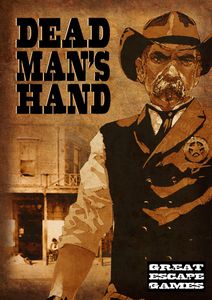
Review of Dead Man's Hand rules


Over the past few weeks I have played numerous games of Dead Man’s Hand (DMH) (Great Escape Games, 2013), against both wargaming friends and others who do not play miniature gaming. I’m not giving AAR of individual games, but they were all fun and quick.

The rules are nicely presented and illustrated, and they remind me strongly of other rules produced by Tomahawk Studios (Saga, Muskets & Tomahawks etc.) due to the use of character narrative boxes to clarify specific rules and ideas. The rule mechanics are simple and easily understood. There is not a great deal of depth; a pistol is a pistol, and not further distinguished by make (Colt vs Remington) or type (single action vs double action) etc., but I did not find this an issue. I was primarily searching for a fast paced, all action set of rules reflecting the ‘Hollywood’ style of game experience.

I really like the use of initiative cards to determine turn order. I was initially concerned that the card reveal would give too much advanced knowledge to players, in contrast to the more disguised randomisation used in “Rules With No Name” (RWNN) which I had previously played. The ability to assign the first card drawn was also a good mechanic, giving a player some control over the initiative phase. In addition I was concerned that the small size of the cards would be an issue but after a game or two it became clear that the small card size was necessary to reduce table clutter. That said, the cards do result in table clutter, but I cannot see a way around this distraction.

The ‘action’ phase (3 actions per turn) is simple. We often found that players ‘forgot’ to definitively state their actions before their move, which may cause dispute. I therefore made some order counters (dice) which players select prior to their move, and this worked well to define actions. Moving first (higher initiative) may seem best, but later players have the option to use ‘interruptions’ which can be very useful for survival. Interestingly everyone frequently used the ‘duck back’ option whilst the ‘quick shot’ was very rare, most players were not willing to sacrifice their total move for a single, simultaneous shot at an opponent. The movement tokens are another good idea, clearly tracking the move actions of individual figures.


A great mechanic revolves around the dual use of the cards; as well as determining initiative, a number of cards are held in a player’s hand. Each card has a specific effect that can alter the actions of your own or opposing figures, and choosing when and where to play these cards is key. As well as generic cards (2-10), there are gang specific cards (J-A). As you only get a single replacement card, it is best not to play more than one card in a turn. No player used an identical card to cancel that of an opponent’s card in any of my games (not sure why, maybe just down to chance).

Shooting is easily calculated by rolling a D20. A natural ‘1’ results in out of ammo, and a modified score of ‘19+’ is an out of action. The differences between pistol, repeater and rifle work well. Rifles are best at longer ranges and after taking a couple of actions aiming. Shotguns can be deadly a close range (I would have liked a sawed-off version included), and players usually let loose with both barrels if they can. The accumulation of ‘under fire’ markers is easier than tracking specific light/heavy wounds, but because they can be recovered it means that top characters with 5 hits can be hard to take down. These top characters usually need to be taken out by a single ‘19+’ score. The probability of ‘out of ammo’ (1/20) seems low considering most weapons have only 6 shots, but I can understand the game rational; it is a random event, players don’t need the book-keeping of tracking shots, and constantly running out of ammo would prove frustrating. Reloading (a single action) seems a bit too quick for me, and cover also seems too slight.

At no point in any of the games I played was there any example of hand-to-hand fighting, so I cannot comment on these rules, but it appears to revolve around a simple comparative dice roll. No player ever resorted to riding horses (even though they were on table and available), so again I cannot comment on these rules. The ‘big nerve test’ gives a clear game end, which is useful, and relates to the number of characters down irrespective of level, so you cannot sacrifice your lower characters as cannon-fodder.

The gang specific rules again add colour to the game. Remembering to enact these gang rules is one of the things a player needs to keep in mind, and I found I frequently had to remind non-gaming opponents to employ their unique rules. I used all 4 basic gang types in the games played and the specific rules were always useful and worked well. Rather surprisingly I don’t have a personal favourite gang yet! Most of the games played were simple stand-up fights, but I did play a couple of linked scene games given in the rulebook and these went OK, but I need to play more of these linked scenes before I can comment on them. When playing gamers I used 21 Rep point gangs (8-9 figures), but with non-gamers I used 12 Rep gangs (5-6 figures) lead by either a boss or right-hand leader, and I found these to work well and keep the game to less than an hour generally.
So, my final thoughts on DMH: I really like them! They are fast and fun. I think they give as good a game as given by my previous favourite rules for the Wild West, RWNN, and they are certainly easier to explain to new gamers and non-gamers. I do have a few minor gripes: (1) No sawed-off shotguns (2) The out of ammo probability seems too low. Maybe introduce an increased probability for 2nd and 3rd shots in a turn (natural 1,2 for 2nd shots; and 1,2,3 for 3rd shots)? (3) Reloading is too easy and quick. Maybe introduce the need to pass a ‘nerve’ test to successfully reload? If fail, then a player can either insert a second reload order in their sequence (discarding their last action), or change the next order to reload. A character always succeeds if they carry out 3 successive reload actions. This would make reloading less certain and more time consuming in terms of actions expended. Top characters would be more likely to pass, whilst weak characters and those under fire, less likely. I have yet to try this out, but it is worth a thought.

Saturday, 6 August 2016

Off the Painting Table (Aug 2016)


I have spent the last couple of weeks painting the AWI/FIW Colonial Militia figures by Warlord Games that I bought at the Attack show.

Assembly of the figures was straight forward although the range of pose and equipment etc. is not as great as found in other plastic kits produced by other manufacturers. Also the depth of the sculpting is also less detailed, but I think I’m being a bit picky when I consider what was available only a few years ago when you were lucky to find a range of metal figures with  more than half a dozen variants available. These are perfectly acceptable figures and my only advice would be to use highlighting judicially when painting them up.


The first 15 figures wear hunting shirts. I like to paint these in ‘muted’ colours, but I did try a couple of figures in a purple colour.


After the first 2 colour shades, the fringing on the hunting shirts did not stand out, so I decided to only use highlighting on the fringes and not on all raised areas. I did experiment using a more standard highlighting technique, but found the detail just disappeared.


The next batch of 15 figures wear standard clothing. I also used ‘minNatur’ foliage clumps when basing. I have often seen basing using such commercial foliage, but have never tried it myself. For me the jury is still out; it looks OK but is it too fussy? I’m not sure.
 I now think I have more than enough figures for AWI/FIW skirmish gaming.